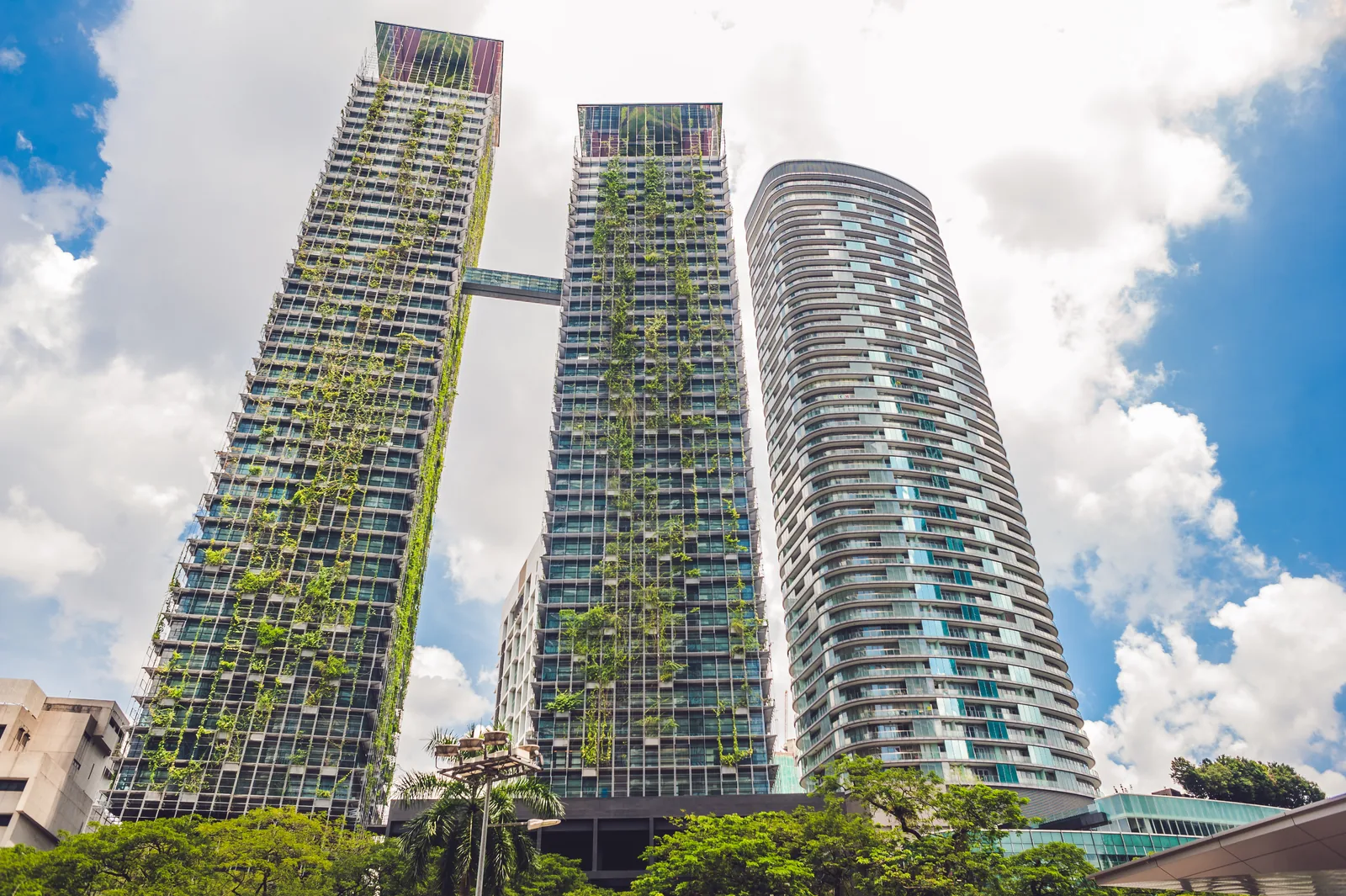
Investing in luxury real estate in 2026 means underwriting six forces at once: branded residences command a 33% average premium (Savills), millionaire migration is on track for 165,000 relocations (Henley & Partners), a rising share of deals close off-market, wellness and longevity design now sits inside an $876B global category (Global Wellness Institute), AI search still barely sees the industry, and trophy assets keep outrunning the broader market. Across Miami, Marbella, Dubai, Abu Dhabi, and Las Vegas, five of the six currently favor sellers over buyers, which is the first thing an investor should price in before weighing any single asset.
Read as an investment decision, each of the six forces below is an allocation question: where capital is entering, what it costs to get in, what the recent price record shows, and where the risk actually sits. The market-by-market entry table further down turns the trends into starting numbers across Dubai, Abu Dhabi, Marbella, Miami, and Las Vegas.
Why are branded residences still commanding a 33% premium in 2026?
Branded residences hold a global average price premium of 33% over non-branded equivalents, unchanged from the year before and structural rather than a one-year spike. Resorts run hotter still, at 39%, and in fast-growing cities the gap can reach 47% (Savills Branded Residences Report 2025/26).
The category has nearly tripled in a decade: 323 branded projects existed in 2015, roughly 910 by the end of 2025, with 837 more contracted through 2032 (Savills). MENA led growth at 187% over five years, ahead of Asia-Pacific's 55%. Knight Frank's Global Branded Residence Survey 2025 puts the range at 20% to 35%, and finds branded stock also outperforms on resale value and rental demand, which is closer to the real reason buyers pay it than the brand name itself. The premium is also uneven across markets: Savills puts it near 33% globally but around 64% in Dubai and 87% in Abu Dhabi, so the same brand underwrites a very different entry cost depending on where an investor buys.
Dubai supplied the anchor transaction in December 2025: a six-bedroom penthouse at Bugatti Residences by Binghatti in Business Bay sold for $150 million, Dubai's most expensive penthouse sale on record (Arabian Business), a hospitality-and-automotive crossover brand commanding a scarcity price, not a discount for scale. Buyers are paying for an operator that reduces execution risk on staffing, maintenance, and resale liquidity, precisely what a licence fee is meant to buy, and that operator question gets harder to answer once the brand on the door is not a hotel group. We cover that shift in our guide to branded residences beyond hotel brands.
What does a record year of millionaire migration mean for buyers and sellers?
Henley & Partners projects 165,000 millionaire relocations for 2026, up 16% on the record 142,000 moves in 2025. The UAE led all destinations in 2025 with roughly 9,800 incoming millionaires and $63 billion in associated wealth, while the UK recorded the largest single-country outflow ever tracked, about 16,500 millionaires leaving.
Migration is now a demand engine visible directly in transaction data, not headline counts alone. In Las Vegas, a household earning $1 million a year saves roughly $130,000 annually in state income tax by relocating from California to Nevada's zero-income-tax structure, about $1.3 million over a decade, and the effect shows in the buyer pool: cash purchases run 62% of all luxury transactions and 68% to 84% at the ultra-luxury tier, where financing rarely enters the decision (Las Vegas luxury market reporting, 2026).
For capital, migration reads as a demand signal with a direction: markets absorbing millionaires, the UAE above all, inherit a widening buyer pool, while outflow markets face the reverse, so net inflow rather than headline price is the number an investor should track here.

Two questions get conflated here and should not be: where a person is moving to live, and which legal instrument, a residency-by-investment program, a tax domicile change, a corporate relocation, gets them there. Program mechanics belong in our Golden Visa guide; the migration pattern itself, and what it means for cross-border trophy buying, is the subject of our dedicated wealth-migration piece.
Why are more luxury deals never getting listed at all?
In some US markets, up to 20% of transactions now happen off the MLS entirely (NAR), and pocket listings have risen 67% since the Clear Cooperation Policy took effect in 2020 (Redfin), moving from roughly 2.4% to 4.0% of all sales nationally. A March 2026 independent study reported by The Real Deal found that homes never listed on the MLS sold for 1.7% more than comparable properties that were marketed publicly, which cuts against the assumption that public exposure is what maximizes price.
Miami and Palm Beach County illustrate why. The Corcoran Group has reported rising off-market activity across Palm Beach, Wellington, Delray Beach, and Jupiter, driven by buyers who want privacy and early access before a property is shown widely, consistent with the top of the Miami market itself: the $10 million-plus segment runs more than 80% all-cash (Miami market reporting, 2026), the same buyer profile that tends to prize discretion over reach.
The trend favors sellers on two fronts: better realized pricing, per the March 2026 study, and control over who sees a property before terms are set. For buyers, it means the best inventory increasingly never reaches a portal. The investment consequence is access, not analysis: an investor working only from public portals is bidding on the residual market, while the assets with the cleanest pricing and the earliest entry move privately. Our off-market guide covers how principal-side buyers get early access to deals that never go public.
How is wellness and longevity-led design changing what UHNW buyers will pay for?
The wellness real estate category reached $876 billion globally in 2025, growing at 23.6% a year since 2019, and the Global Wellness Institute forecasts it will reach $1.8 trillion by 2030. The US ($254B), China ($218B), and the UK ($51B) are the three largest national markets, while Italy, Spain, and Saudi Arabia posted the fastest growth since 2019, at 50%, 46%, and 34% respectively.
The Global Wellness Institute's April 2026 framing is the more useful signal than the dollar figure: the category is moving from amenity checklists, a gym, a spa room, toward integrated, longevity-oriented systems, air and water quality, circadian lighting, recovery infrastructure, built into the architecture rather than added afterward. Abu Dhabi's Saadiyat Island is a live example: prices there rose 20% to 30% in 2025 alone, part of a near-record first quarter of 2026 for the emirate, roughly 39% off-plan price growth citywide across more than 7,200 transactions (Savills), and the island's Cultural District positioning, museums and wellness-led master planning together, is the product being priced, not the square footage.

This trend rewards developers who build the systems in from the start over those retrofitting spa amenities into an existing floor plan, exactly the distinction we look for when evaluating a project. For an investor the line to hold is structural against decorative: systems built into the architecture are what a Saadiyat-style premium is pricing, and they are far harder for a competing project to replicate than a spa floor added later. Our companion guide on wellness and longevity-led design goes deeper on which features are structural and which are decorative.
Is AI actually changing how UHNW buyers search for property?
Not yet, and that gap is itself the story. Luxury real estate has the lowest AI Overview trigger rate of any major US industry, just 0.14%, even as 82% of real estate agents now use AI daily in their own workflow (5WPR and Haute Residence, 2026). The industry has adopted AI as a productivity tool faster than it has become visible inside the AI answers buyers actually see.
Where the industry is visible, brand concentration is stark: branded residences capture 78% of the AI search recommendations that do surface within South Florida's ultra-luxury market specifically (5WPR's "South Florida AI Luxury 50," 2026), a direct link back to the branded-residence premium above. The population behind the search behavior is not small: Altrata counts 510,810 UHNWIs globally, whose total wealth exceeds the GDP of the US and China combined.
The practical read for 2026: buyers researching a $5 million-plus purchase increasingly start inside an AI assistant, and the developers, brokers, and platforms who show up there, structured facts, named sources, direct answers, shape the shortlist before a human agent is contacted, the same principle behind how we structure this article. The near-term investment takeaway is narrow: AI is not yet a dependable way to source or price prime stock, and the answers that surface over-index on branded product, so the research edge still comes from named sources and direct market data rather than an assistant's shortlist. Our AI-search guide covers what UHNW buyers actually ask these tools.
Why are trophy assets holding value while the broader market cools?
Global prime residential prices rose 3.2% on average in 2025, with 73 of the 100 markets Knight Frank tracks posting gains and 24 declining (Knight Frank Wealth Report 2026). The Middle East led all regions at +9.4%, driven by Dubai's +25.1%, while North America slipped -0.9% and Tokyo posted an outlier +58.5%. Knight Frank frames prime markets as "decoupling" from mainstream housing conditions, and roughly 89 new UHNWIs are entering the market globally every day, intensifying competition for assets that cannot be replicated.
Marbella is the clearest example inside our own markets. Knight Frank recorded 8.1% prime price growth there in 2025, more than double the European prime average of roughly 3.3%. Early 2026 figures show transaction volume falling 35.6% quarter over quarter after an unusually strong year-end, while average prices held broadly stable (Marbella market reporting, 2026), a market moderating on volume, not price, because prime land is scarce, zoning is stringent, and permitting is slow. Local forecasts put 2026 growth in the top coastal areas, Marbella, Estepona, Mijas, Benalmádena, at 5% to 9%. Dubai shows the same pattern differently: freehold villa values are up 206% since the pandemic (ValuStrat).
Tierra Viva, a small collection of Lamborghini-branded villas above the Golden Mile, is the kind of asset this scarcity read is actually about: a handful of units, not a phased tower, on prime hillside land that cannot be replicated once built out. Priced from €8,400,000, it sits at the same intersection of scarcity and brand as ORLA below, from the opposite end of our market map.

Scarcity is not a marketing word here; it is a supply constraint that shows up in permitting timelines and zoning maps before it shows up in a price. It is also the one force on this list that shows up directly as appreciation rather than as pricing power or access, which is why a long-hold investor tends to weight it above the others, since a constraint written into a zoning map does not soften with the rate cycle. Our trophy-asset scarcity guide breaks down which asset types are genuinely irreplaceable versus merely expensive.
How do the six trends compare, and who do they favor?
Five of the six trends currently strengthen the seller's position, through pricing power, information asymmetry, or supply constraint. AI search is the outlier, favoring informed buyers who know how to extract a direct answer from a system that mostly stays silent on this industry, while also rewarding sellers and brands that invest early in being visible to it.
| Trend | Favors | Brightwill market hit hardest |
|---|---|---|
| Branded residences | Seller | Dubai: $150M Bugatti Residences record; MENA branded supply +187% in 5 years |
| Wealth migration | Seller | Las Vegas: zero state income tax, 62-84% cash-buyer share |
| Off-market & discretion | Seller | Miami: Palm Beach off-market growth; $10M+ segment >80% cash |
| Wellness & longevity design | Seller | Abu Dhabi: Saadiyat Cultural District, +20-30% in 2025 |
| AI-driven search | Buyer (provisionally) | Miami: the AI visibility data is explicitly South-Florida-anchored |
| Trophy-asset scarcity | Seller | Marbella: +8.1% prime growth vs. +3.3% Europe average |
No single Brightwill market absorbs all six trends. Dubai and Miami each carry two, a sign that scale and liquidity compound advantages once a market already has them.
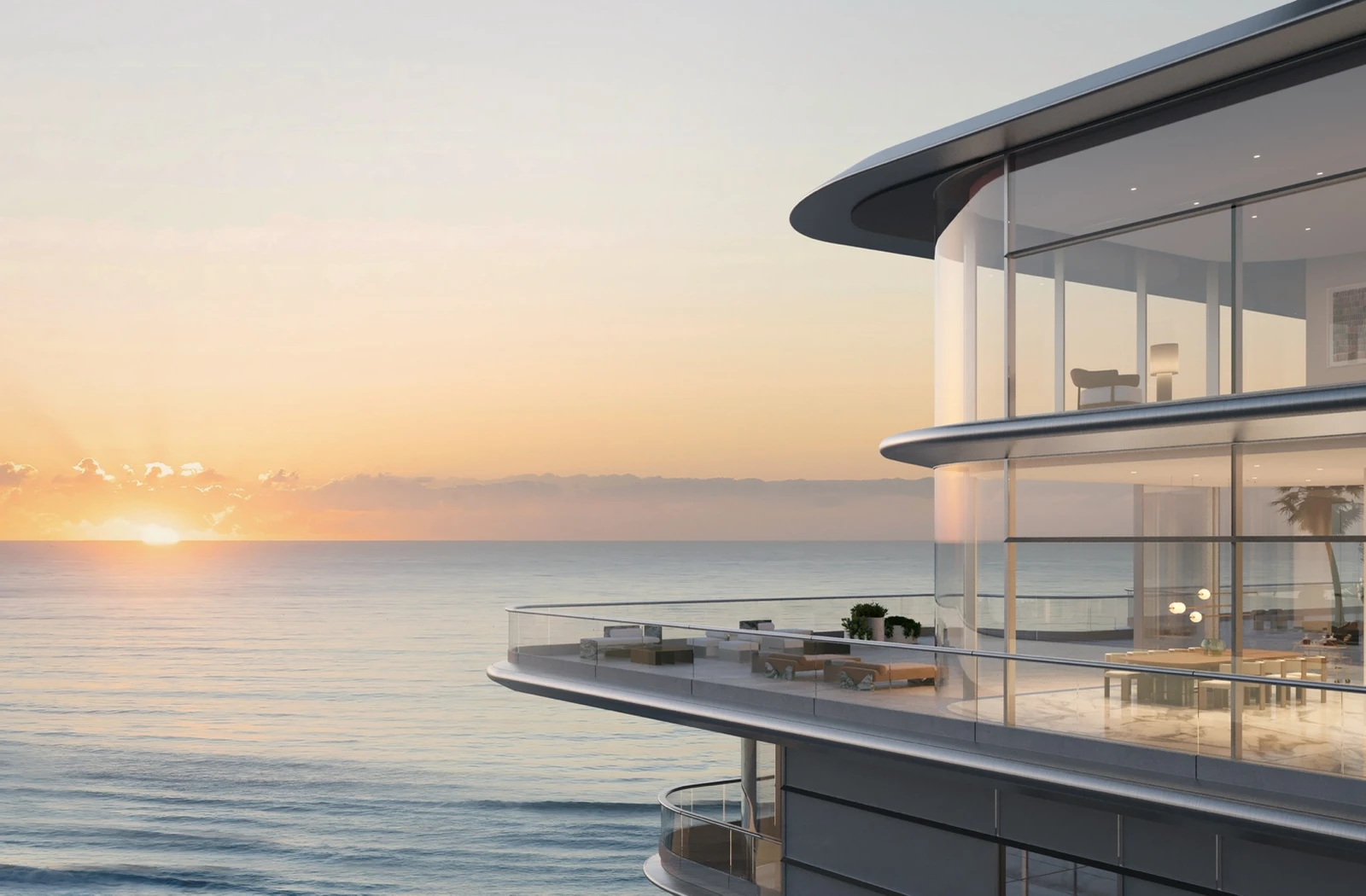
Where branded and trophy intersect is where the premium is largest, and hardest to walk back if paid for the wrong reason. ORLA, Dorchester Collection, Dubai, one of the projects we currently surface, sits at that intersection: a hospitality-grade waterfront address carrying a selective brand licence, priced from $6,000,000, an asset the branded-residence premium above is describing, not a generic tower with a logo attached.
What does it cost to enter each Brightwill market in 2026?
Entry into luxury real estate does not start at one number; it starts at a different number in each market, set by what is scarce there and how buyers pay for it. Across the five markets we cover, the practical entry references run from roughly $6,000,000 for a branded waterfront residence in Dubai to €8,400,000 for a trophy villa above Marbella's Golden Mile, with the recent price record and the dominant force behind each summarized below.
| Market | Entry reference | 2025 price record | Dominant force for an investor |
|---|---|---|---|
| Dubai | ORLA, Dorchester Collection, from $6,000,000 (branded waterfront) | Prime +25.1% in 2025; freehold villas +206% since 2020 (ValuStrat) | Branded premium (64% in Dubai, Savills) and trophy scarcity |
| Abu Dhabi | Saadiyat Island, wellness-led master planning | Saadiyat +20-30% in 2025; off-plan +39% citywide in Q1 2026, 7,200+ deals (Savills) | Wellness-led design; branded premium 87% (Savills) |
| Marbella | Tierra Viva, Lamborghini villas, from €8,400,000 | Prime +8.1% in 2025 (Knight Frank); 5-9% forecast for top coastal areas in 2026 | Trophy-asset scarcity (constrained land, slow permitting) |
| Miami | $10M-plus tier runs >80% all-cash | North America region -0.9% in 2025 (Knight Frank); top tier holds on cash depth, not index momentum | Off-market discretion and AI visibility (78% branded, South Florida) |
| Las Vegas | Zero state income tax; cash 62-84% of luxury deals | No prime index cited; demand is migration-driven | Wealth migration (about $130,000 a year saved versus California) |
Two structural choices sit under every one of these entry points: off-plan against completed stock, and branded against non-branded. Off-plan lowers the entry through staged payments in exchange for construction risk, which is why the Gulf pipeline skews that way, off-plan prices in Abu Dhabi rose roughly 39% citywide in the first quarter of 2026 across more than 7,200 transactions (Savills). Our HNW off-plan buying guide covers where that trade works, and our Miami neighborhoods guide maps the submarket entry points behind the US figures above.
The bottom line
Trends do not move every market the same amount. Branded residences and trophy scarcity concentrate in Dubai and Marbella; migration-driven demand concentrates in Las Vegas; discretion and AI visibility concentrate, for now, in Miami; wellness-led design concentrates in Abu Dhabi's Saadiyat submarket. A buyer or seller who reads all six trends as one undifferentiated "luxury market is up" story will misprice the specific asset in front of them. That is the practical test of investing in luxury real estate in 2026: pricing one asset's exposure to each force, not buying the market average. The entry table above is where that test becomes concrete: roughly $6,000,000 in Dubai buys a different risk-and-return mix than €8,400,000 in Marbella, and the force driving each is not the same.
The throughline across five of six trends is the same: sellers with something genuinely scarce, a brand licence, a submarket with constrained supply, a listing kept off the public record, are capturing more of the value in 2026 than they were two years ago. The one trend that still favors buyers, AI search, favors only the ones who already know what question to ask.
The Brightwill view
We read these trends the way we read any single luxury real estate investment, by asking what is actually scarce versus what is merely marketed as scarce. A branded-residence premium is defensible when it buys a real operator and a real waiting list; it is not defensible when it buys a licence fee attached to an ordinary tower. A market moving 8% a year is worth entering when the constraint behind the number is structural, zoning, permitting, physical coastline, not when it is a temporary supply gap that a single approved project could close.
Brightwill Luxury is a curated access platform, not a brokerage, developer, or financial adviser. The projects we surface across Miami, Marbella, Dubai, Abu Dhabi, and Las Vegas are selected against the operator question first, brand or no brand, and we say plainly where a premium looks defensible and where it does not.
Discuss how these trends apply to your specific market and timeline with our advisory team →