Prime residential prices rose an average of 3.2% across the 100 markets Knight Frank tracks in 2025, and the gains concentrated hardest where land or a named address cannot be replicated (Knight Frank, Wealth Report 2026). Dubai’s prime segment rose 25.1%. Monaco holds the world’s highest floor, roughly €57,569 per square metre. Miami and Marbella are more layered, broad averages softened while the true trophy tier held firm. Across all four, scarcity, not sentiment, is setting the floor. This is one thread of a wider shift, see our full 2026 trends overview for the other five.
What is actually driving trophy-asset price resilience in 2026?
Roughly 89 people crossed the US$30 million wealth threshold every day, on average, over the past five years, and the global ultra-high-net-worth population reached 713,626 in 2026 (Knight Frank, Wealth Report 2026). That buyer pool is growing faster than the supply of genuinely irreplaceable real estate, much of it crossing borders to do so, a pattern our wealth-migration coverage tracks in more depth. Knight Frank frames it as a “shortage of prime, move-in-ready housing” that has become a defining feature of these markets, with affluent buyers favoring turnkey assets over anything carrying renovation risk.
The mechanism is structural, not sentimental. A frontline plot on the Costa del Sol, a beachfront lot in Miami, or a villa on Palm Jumeirah cannot be manufactured to meet new demand, the coastline and the zoning are fixed. When the buyer pool expands against a supply line that does not move, price resilience follows almost mechanically, independent of what the broader mainstream housing market is doing in the same city.
How resilient is Dubai’s trophy segment?
Dubai closed 500 home sales above US$10 million in 2025, a record, up 15% year-on-year in volume and around 28% in value to US$9.05 billion (Knight Frank, Wealth Report 2026, via The National). Within that figure, the very top narrowed fastest: 68 of those sales cleared US$25 million, up nearly 48% year-on-year. Dubai is now the world’s most active $10 million-plus residential market, and the acceleration is concentrated exactly where scarcity is tightest, Palm Jumeirah’s fixed island footprint and Emirates Hills’ closed villa enclave, both effectively unable to add new supply.
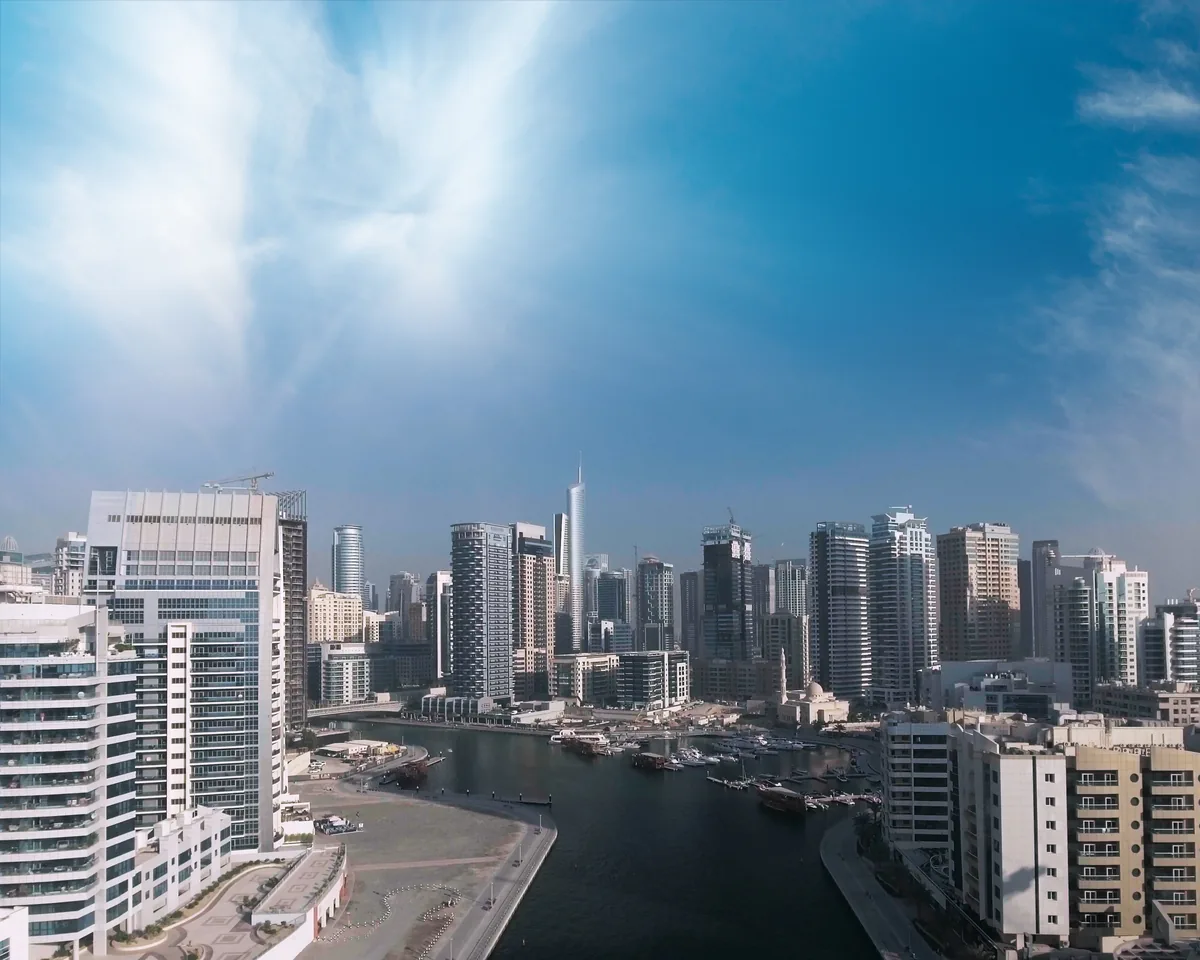
That combination, a 25.1% prime price gain sitting alongside record transaction counts, is what a genuinely supply-constrained market looks like. It is demand chasing a fixed number of addresses, not demand chasing a market that is simply popular.
Why does Monaco charge more per square metre than anywhere else?
Monaco’s average prime price reached €57,569 per square metre as of the fourth quarter of 2025, with the Larvotto district crossing €70,000 per square metre for the first time (Knight Frank research). US$1 million buys just 16 square metres of prime property in Monaco, against 33 square metres in London, the tightest space-per-dollar ratio Knight Frank tracks anywhere. The Principality has held the title of the world’s most expensive prime residential market since it crossed the €50,000 per square metre mark in 2021.
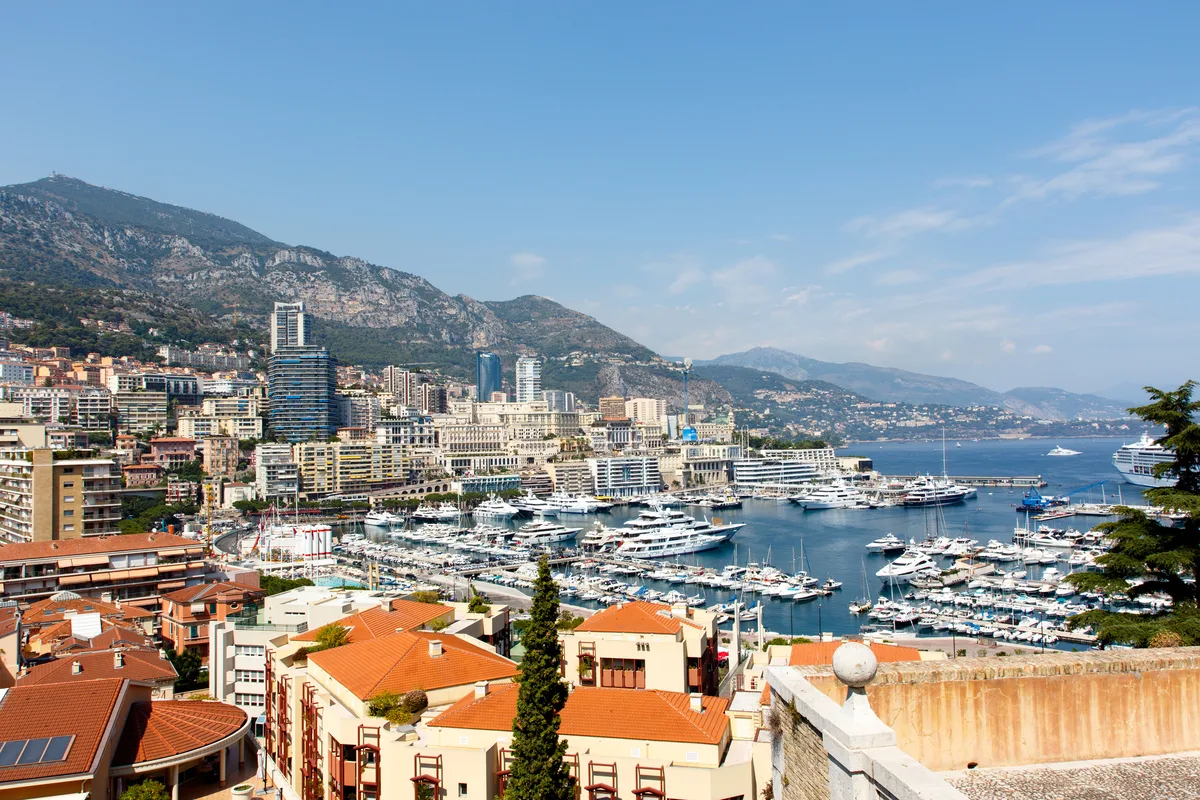
The arithmetic is unusually pure here. Monaco is 2.1 square kilometres, sovereign, and effectively built out, so its price ceiling is set almost entirely by physical land supply rather than by financing conditions or a broader national housing cycle. It is the clearest single illustration of the scarcity thesis this article is making.
Is Miami’s trophy tier really resilient, or is the headline number misleading?
Both things are true, and worth stating plainly rather than smoothing over. US$1 million now buys just 58 square metres in Miami, roughly half of what the same budget bought five years ago (Knight Frank, Wealth Report 2026, via CNBC), which reads as scarcity-driven appreciation. At the same time, Miami’s broad market softened slightly through 2025, part of a wider North America pullback of -0.9% in Knight Frank’s index, driven mainly by Canada.
The two figures are not contradictory, they describe different tiers of the same market. The US$10 million to US$50 million trophy single-family segment in Miami stays supply-constrained and transacts largely off-market, relationship-driven, with minimal time listed, even as broader luxury averages cool. A buyer reading only the headline index risks missing that the top of the market and the middle of the market are behaving in opposite directions.
What makes Marbella’s frontline scarcity structural rather than cyclical?
Marbella’s average asking price reached €5,162 per square metre by mid-2025, up 9.8% year-on-year, with prime housing appreciating 8.1% over the same period, more than double the wider European prime average (Constans Group, Marbella Real Estate Market Report 2026; consistent with Knight Frank’s own Marbella figure). Los Monteros hit €8,772 per square metre in February 2026, up 11.9% year-on-year, and Nueva Andalucía reached an all-time high of €5,654 per square metre.
Frontline-beach villas on the Costa del Sol command a 60% to 80% premium over otherwise comparable second-line properties (Bromley Estates Marbella). That premium is not a marketing number, it is what scarce coastline actually costs when prime land is capped by strict zoning and slow permitting, and almost no new frontline plots are being released onto the market. Buyers who wait for a lower entry point on the Golden Mile are, in effect, waiting for a supply line that structurally will not loosen.
Which markets are actually scarce, and what does that mean for a buyer?
| Market | 2025 prime price move | What’s genuinely scarce | Buyer read |
|---|---|---|---|
| Dubai | +25.1%; 500 sales above $10M, 68 above $25M | Palm Jumeirah, Emirates Hills fixed footprint | Fastest-growing top tier of any tracked market |
| Monaco | Holds world’s highest floor, ~€57,569/m² | 2.1 km² sovereign land, effectively built out | Tightest space-per-dollar anywhere; a pure scarcity play |
| Miami | Broad index softened (-0.9% North America composite); trophy tier separate | $10M-$50M off-market, relationship-driven stock | Headline and trophy tier move differently, read both |
| Marbella | +8.1% to +9.8% depending on the metric | Frontline coastline capped by zoning, permitting | Structural, not cyclical, scarcity on the Golden Mile |
| Global average (100 markets) | +3.2% | — | Baseline against which the above are outliers |
Which trophy asset actually clears this bar in 2026?
Among the projects we surface, Villa Nature, a €24,000,000 frontline estate in the hills above Marbella, is a direct case study in what this scarcity looks like at the asset level. It spans 3,981 square metres of living space across three levels on a 10,451 square metre plot, with seven bedrooms and a 131 square metre subterranean spa built around a cryotherapy room and hypobaric chamber. The listing states the case in its own terms: frontline plots of this size with uninterrupted views are a fixed and shrinking supply on the Costa del Sol, and cannot be manufactured. That is the scarcity argument this article makes, stated by the asset itself rather than by us.

The comparison worth drawing is with Dubai’s branded-residences boom, which we break down in our guide to branded residences in 2026, where developers are adding supply at scale even as prices climb. Villa Nature sits at the opposite end of that spectrum, a single, unrepeatable plot rather than a branded tower with more units still to sell.
The bottom line
Trophy-asset resilience in 2026 is not a story about luxury real estate broadly, it is a story about what specific supply lines cannot expand. Dubai’s fixed island and enclave footprints, Monaco’s sovereign 2.1 square kilometres, and Marbella’s zoning-capped frontline coastline all price the same way for the same reason, a buyer pool of roughly 89 new UHNW entrants a day chasing addresses that do not multiply. Miami is the exception worth watching closely, because its headline index and its true trophy tier are currently telling two different stories, and conflating them is the most common mistake in this segment.
The Brightwill view
We read scarcity the way we read any claim in this market, by verifying what is actually fixed rather than accepting a marketing description of “limited supply.” A frontline plot that genuinely cannot be replicated, a sovereign footprint that genuinely cannot expand, or a zoning line that genuinely will not move, these hold value through a cycle. A development simply marketed as “exclusive” does not. Among the assets we surface, the ones we lead with are the ones where the scarcity claim survives that check.
Brightwill Luxury is a curated access platform, not a brokerage or financial adviser. Market data moves quarter to quarter, verify current pricing and availability with our advisory team before any commitment.
Discuss trophy-asset strategy across Miami, Dubai, Marbella and Monaco with our advisory team →