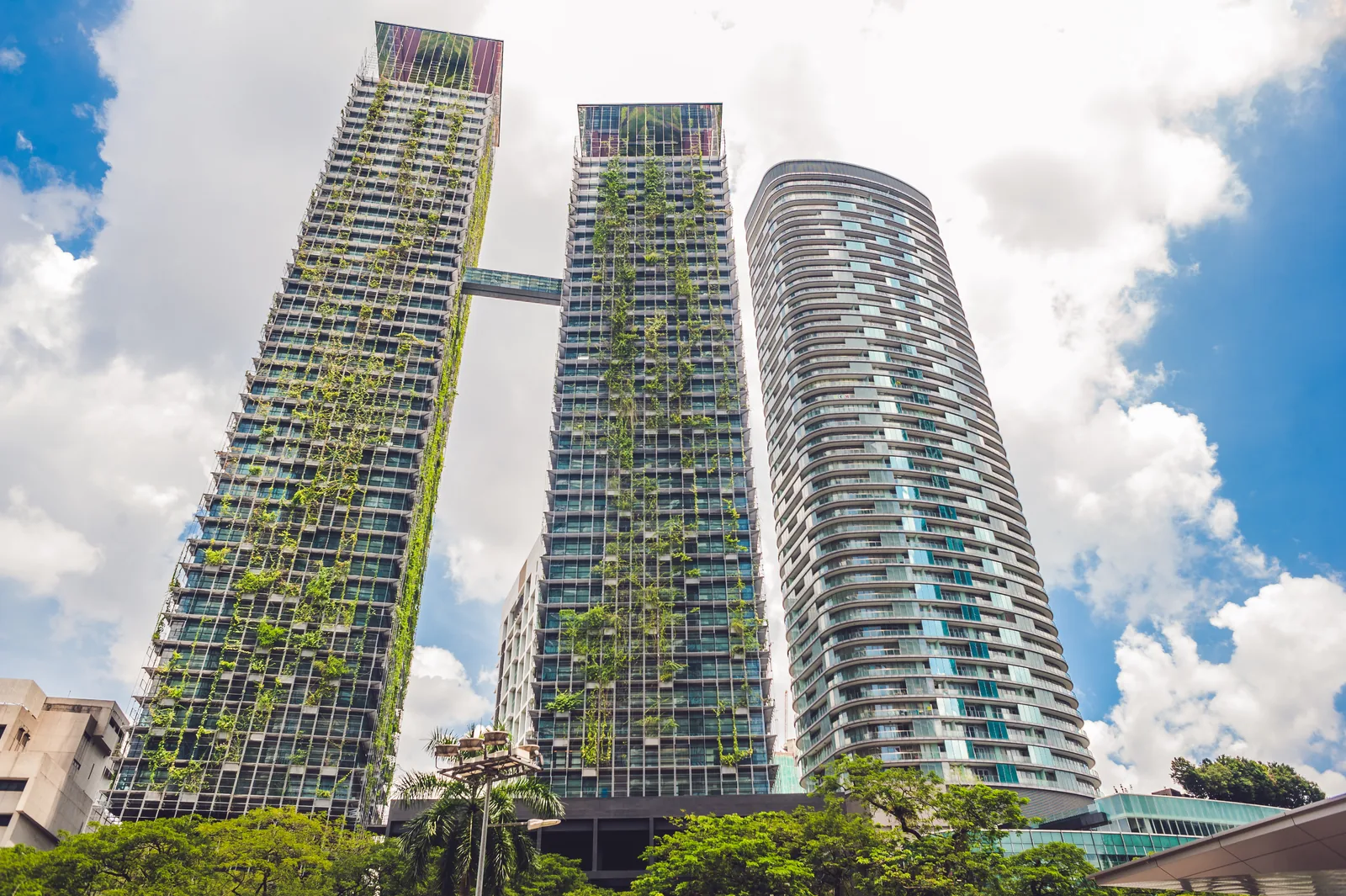
If 2024-2025 was the year wealth migration became a portfolio-level discipline rather than a lifestyle choice, 2026 is the year the question narrowed.
In our last Journal piece on the Great Capital Migration we argued that HNW families are no longer asking "where should we move?" They are asking which three jurisdictions to hold: where you live, where you bank, where your business sits.
For most families now reorganising those three slots, only a handful of credible Western second-home jurisdictions remain. The Caribbean tier is largely about banking and passports. London is a story of outflow. Switzerland is full and expensive.
That leaves two coastlines that keep coming up in client conversations: the Costa del Sol and Miami.
On paper they look similar. Both are mature luxury markets with foreign-buyer dominance above 60%. Both have the deepest branded residence pipelines in their respective regions. Both anchor jurisdictions that, for now at least, sit on the safer side of the geopolitical map. Both will absorb a meaningful share of the 142,000 millionaires Henley & Partners recorded relocating across borders in 2025.
But they are not interchangeable. The residency math, the tax exposure and the inventory profile diverge sharply. This piece is for the family that has decided to anchor in the West and now needs to choose between an EU foothold and a USD one.
Spain: a market that is open, a visa that is not
The most important thing to understand about Spain in 2026 is that it remains fully open to foreign buyers, but the route most ultra-wealthy families used to plant a flag there is closed.
The Spanish Golden Visa, in place since 2013, was abolished on 3 April 2025 under Organic Law 1/2025, part of Pedro Sánchez's housing reform. As of June 2026, no new applications are accepted on the property-investment route. Existing holders can continue to renew, but the door to qualifying for residency by purchasing a €500,000+ home is shut.
This has not stopped the market. Foreign buyers still account for roughly 90% of Costa del Sol luxury transactions, and above 95% in the ultra-prime segment over €10 million in Sierra Blanca, La Zagaleta and the Golden Mile. What has changed is that residency must now be solved separately from the purchase.
The two routes that remain viable for HNW buyers are:
The Non-Lucrative Visa, for those who can demonstrate sufficient passive income and do not intend to work in Spain. It is the cleanest route for retirees, family-office principals and anyone with portfolio income.
The Digital Nomad Visa, for employees of foreign companies working remotely from Spain. The income threshold for 2026 rose to €2,849 per month - a low bar by HNW standards, but the regime now requires applicants to be employed rather than self-employed, which excludes many founders structured as autónomos.
For tax, the headline regime is still the Beckham Law: a 24% flat rate on Spanish-source employment income up to €600,000, rising to 47% above. The Startup Law reforms cut the prior non-residency requirement from ten years to five, opening the regime to a wider pool of returnees and second-time movers. DNV holders who are employed (not freelance) can access it; the filing window is six months from the first Spanish working day, with no extensions.
Andalusia, where the Costa del Sol sits, adds two structural advantages that buyers in Catalonia, Valencia or the Balearics do not get:
- The regional wealth tax has been at a 100% exemption since 2022. No resident or non-resident pays it on assets held in Andalusia.
- Inheritance tax has not been abolished but is effectively neutralised for close family: a 99% relief and a €1 million tax-free allowance for spouse, descendants and ascendants, including non-EU non-residents.
The caveat: the national Solidarity Tax (ISGF), introduced in 2023, applies a 1.7% to 3.5% levy on net assets above €3 million regardless of which region you live in. It was extended indefinitely in 2025. For ultra-HNW families, this is the line item that has to be planned around, not the regional wealth tax that no longer exists.
Florida: no state income tax, harder visa
The Florida story for 2026 is almost the inverse of Spain's. The tax architecture is unusually generous; the residency architecture is unusually demanding.
Florida charges no state income tax on wages, salary, interest, dividends, capital gains or retirement income, and has no state estate, inheritance or gift tax. The federal estate tax exemption sits at $15 million per individual in 2026 ($30 million for a married couple), meaning the vast majority of HNW estates pass tax-free at the federal level as well.
Becoming a Florida resident is procedurally simple for anyone who already has US status: a Florida driver licence within 30 days, voter registration, a Declaration of Domicile under §222.17, and a residential street address. There is no minimum day-count. The legal test is intent plus substantive ties.
For non-US buyers, residency is the harder question. The most relevant route is the EB-5 Immigrant Investor Program, reauthorised by the EB-5 Reform and Integrity Act of 2022 and stable through 2026.
The current minimums are $800,000 for an investment in a Targeted Employment Area (TEA), which covers many rural and high-unemployment-area projects in Florida, or $1,050,000 outside a TEA. The investment must be at-risk and create at least ten full-time US jobs within two years. Thresholds adjust for inflation again in January 2027.
The numbers are the easy part. The friction is processing time. As of May 2026, I-526E petitions for regional-center investors are running around 29.5 months, with the I-829 (conditional-to-permanent green card) adding roughly another 20. For Spanish, European, MENA and most Latin American applicants there is no country-specific backlog, but reserved set-asides for rural and infrastructure projects are widely expected to develop a queue ahead of the September 2026 grandfathering deadline. Chinese and Indian applicants face structural multi-year backlogs that EB-5 does not solve.
The other Florida-relevant residency consideration is the Homestead Exemption: up to $50,000 off a primary residence's taxable value, with constitutional protection from forced sale by most creditors. For HNW buyers, the asset-protection element matters more than the dollar amount.
From Brightwill's Miami portfolio, ORA by Casa Tua is one example of the inventory profile this buyer is now anchoring on. The 76-storey tower on Brickell Avenue houses 540 fully serviced residences with hospitality operated by the Casa Tua group and interiors curated by m2atelier, with one-bedroom entries from $990,000 and layouts running up to four bedrooms. For families running an EB-5 process in parallel with a property purchase, hospitality-led product of this kind has become the default Florida segment: it solves the day-to-day residency question with turnkey, serviced ownership while the visa timeline runs, and removes the active management burden that a Miami single-family acquisition would otherwise carry.
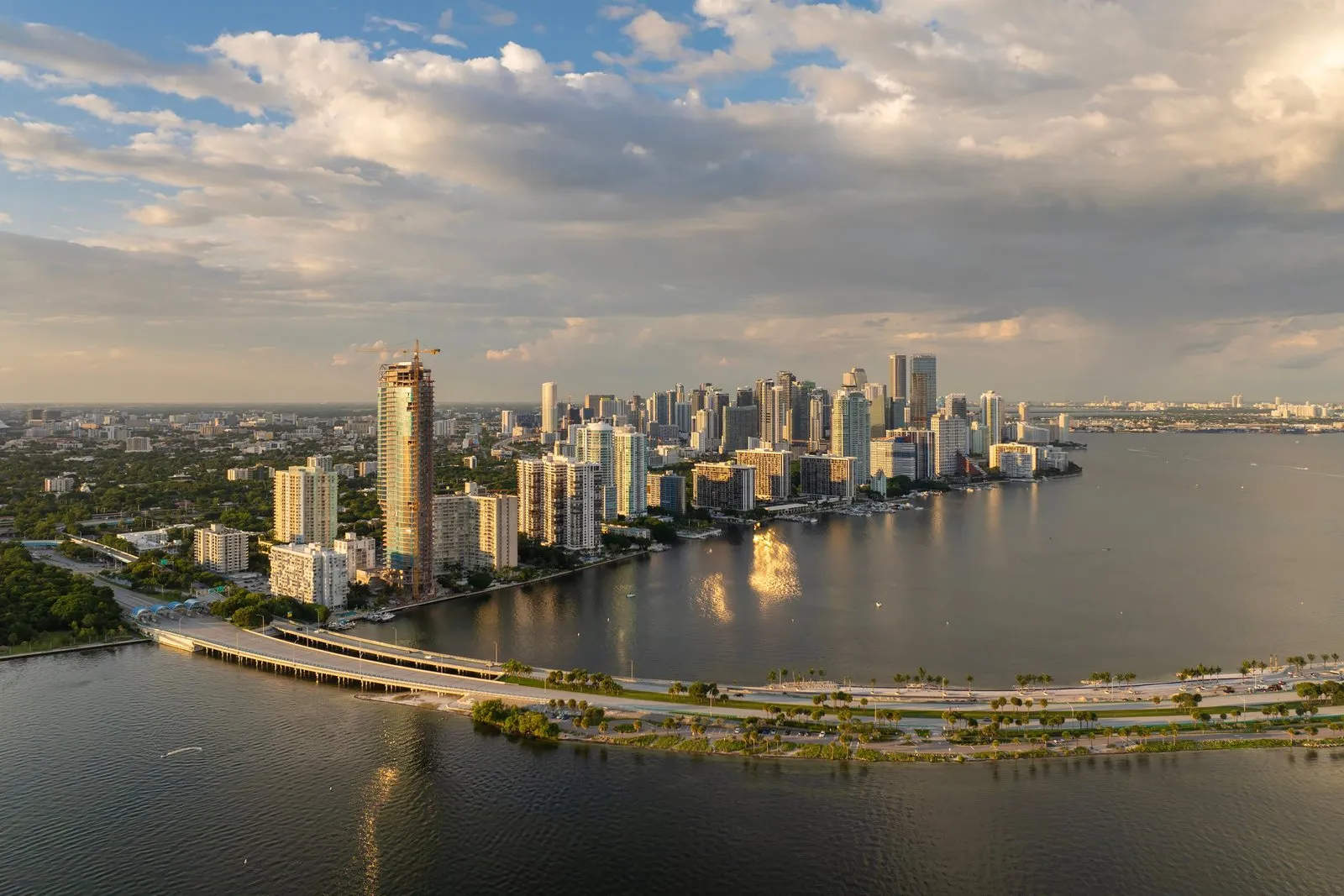
The markets themselves
The two regions track each other closely on the high-level metrics that matter to a buyer choosing between them.
Costa del Sol. Marbella ended 2025 at an average of €5,258 per square metre - the most expensive municipality in Málaga - with luxury inventory transacting in the €15,000 to €35,000 per square metre range depending on segment. Forecasts for 2026 point to 7-8% price growth, a deliberate slowdown from 2025's pace as supply tightens further. The buyer base is unusually diverse: British buyers still lead by share (7.8%), followed by Germans (6.6%), Dutch (6.5%) and Moroccans (5.7%), but the fastest-growing nationalities in 2025 were Polish (+43.7%), Dutch (+40%), Ukrainian (+26.3%) and American (+25%). The American line is new and worth watching.
Miami. Miami-Dade single-family homes traded at around $640,000-$650,000 on average in 2025, but the relevant number for this audience is the top tier: 361 homes sold above $10 million during the year, roughly one every working day. Branded pre-construction in Brickell is transacting at $1,200 to $1,500 per square foot. International capital deployed into South Florida residential real estate reached $3.4 billion in 2025, up 42% from $3.1 billion in 2024. Roughly 43% of all Miami transactions were all-cash; in the $10 million+ tier, that figure rose to above 80%.
The buyer geographies are almost mirror images. Costa del Sol's flow is North-Western European with rising Polish, Ukrainian and US wedges. Miami's flow is dominated by Latin American capital from Colombia, Argentina, Brazil, Venezuela and Mexico, followed by Canada, Europe and a smaller but higher-ticket Middle Eastern and Asian buyer base.
Yields look broadly similar in the prime segment, in the 3-5% gross range, but the cost stack is different. Andalusian holding costs are lower than Florida's: Florida property taxes, insurance (especially post-2024 hurricane-cycle adjustments) and HOA fees on branded buildings can run 1.5% to 2.5% of asset value annually. Spain runs lower on those line items but adds the Solidarity Tax for HNW residents.
The two markets are not interchangeable. The residency math, the tax exposure and the inventory profile diverge sharply.
Where the inventory is
Both markets are now defined by the depth of their branded residence pipelines, but the brand DNA differs.
In Costa del Sol, the inventory is fashion-house and lifestyle-led. Sierra Blanca alone now hosts the first Karl Lagerfeld Villas globally (30 units, completed in 2025), the first Fendi Casa residential project in Europe, and Dolce & Gabbana Marbella (60 units, due in 2026). Four Seasons is breaking ground in 2026 on a 260-residence and 40-villa development with an attached 165-room hotel. Savills' 2026 data places Spain at Europe's joint-largest branded pipeline with 22 projects; the province of Málaga alone could host nearly 900 branded residences by 2027, roughly 93% of the country's branded supply.

From Brightwill's Costa del Sol inventory, three developments illustrate the same progression. Tierra Viva, 53 Lamborghini-co-designed villas in the gated hills of Benahávís from €8.4M, is the automotive-brand counterpart to Miami's Bentley and Pagani product, with a finite, restricted-planning-zone footprint and Centro Stile design language carried into the interiors. Marea, Missoni-designed freehold apartments inside the Finca Cortesin estate in Casares from €1.27M, is the fashion-house equivalent inside one of the most consistently rated five-star resort estates in Spain, with 270-degree views from Marbella across the Mediterranean to Gibraltar and the Moroccan Atlas. And Sierra Blanca by the Sea on Estepona's New Golden Mile from €2.95M, six frontline villas and 42 apartments and penthouses across a 33,346 m² coastal plot, is the rarest profile of the three: one of the last private beachfront sites of this scale on the corridor, with all vehicle circulation routed underground and surface space given over to gardens and beach access.
In Miami, the inventory is hospitality and automotive-led. The active pipeline includes Aman Miami Beach (just 22 oceanfront units), Bentley Residences in Sunny Isles (with the patented car-elevator system), Mercedes-Benz Places Brickell, Pagani Residences in North Bay Village, Waldorf Astoria Hotel & Residences Miami (387 residences plus 205 hotel keys), Cipriani Residences Brickell, Baccarat Residences and St. Regis Brickell. It is the deepest branded pipeline of any single US metro, and the premium it commands - 11% to 18% on a per-square-foot basis over comparable non-branded inventory, according to recent transaction analysis - is broadly in line with Knight Frank's global 25-35% range.
The strategic point: each market gives a buyer a different way to express the same thesis. Marbella offers fashion-house association, lower density, villa-led product and Mediterranean lifestyle premium. Miami offers vertical resort-style towers, deeper amenity stacks, higher liquidity, and the credit-and-currency benefits of being inside the dollar zone.
How to choose
For HNW families using Brightwill's three-jurisdiction framework, the cleanest way to think about Costa del Sol versus Miami is to ask three questions in sequence.
1. Where do you need to be tax-resident?
If the family's wealth is portfolio income and the primary objective is to reduce ongoing taxation, Florida's combination of no state income tax, no state estate tax and a $15M federal exemption is unmatched among Western jurisdictions. Spain's Beckham Law is competitive on employment income but does not solve the Solidarity Tax exposure on net wealth above €3 million.
2. What jurisdiction do you need exposure to, not in?
If the family already holds a US footprint and needs European optionality - access to Schengen, an EU passport pathway over time, currency diversification away from USD - Costa del Sol is the more interesting answer. If the family is moving capital out of Europe or the GCC and needs USD-denominated, mortgage-financeable inventory inside a Western legal system, Miami wins.
3. Is the residence the lifestyle asset or the financial one?
Marbella inventory has historically been bought with both motives intertwined. Miami inventory, particularly branded pre-construction, has increasingly been bought as a financial position with optional use. A family that wants their home to also be their balance-sheet hedge will lean Miami. A family that wants their balance-sheet hedge to also be a place they actually live six months a year will lean Marbella.
The families we work with most often hold both. That is not because the markets are similar. It is because they are precisely complementary.
The bottom line
The right answer in 2026 for most ultra-HNW buyers is not Costa del Sol or Miami. It is Costa del Sol and Miami, sized differently.
Marbella, post-Golden-Visa, has reverted to what it was before 2013: a market where the residency question is solved separately, the lifestyle and wealth-tax case is exceptional in Andalusia specifically, and the branded inventory has reached fashion-led density that no other European resort market matches.
Miami in 2026 is the deepest branded-residence pipeline in the United States, with the most favourable estate-and-income tax structure in the Western world for those who can either secure US residency directly or run an EB-5 process they are willing to wait through.
For families using property to anchor a Western jurisdiction within a wider portfolio of three, the question is rarely which to buy. It is which to buy first, and how to size each so that the lifestyle, the tax position and the residency path all reinforce one another.
At Brightwill, the projects we surface are selected with all three jobs in mind. Our current inventory across both markets - Tierra Viva, Marea and Sierra Blanca by the Sea on the Costa del Sol, and ORA by Casa Tua in Miami - is curated for buyers using property as the qualifying basis for residency and as a long-hold balance-sheet position.
Discuss your residency and real estate strategy with our concierge team →