Savills counted 19 new non-hotel brands entering the branded-residence category in 2025, against 39 new hotel brands, in a sector that has grown from 323 schemes in 2015 to roughly 910 by the end of 2025 (Savills, Branded Residences 2025/26). The short answer for buyers: when the name on the building is a fashion house, an automaker, or a heritage maison rather than a hospitality group, the premium buys the name and the design first. The service infrastructure a Four Seasons or Ritz-Carlton brings in-house is not automatic, some non-hotel licensors partner with an established operator behind the scenes, others run the program themselves, and that distinction is now the diligence question.
What changed in the branded-residence category for 2026?
The category widened past hotels this year. Savills’ 2025/26 report tracks the sector’s arrival at roughly 910 schemes worldwide, up 19% on 2024 and nearly triple the 323 that existed in 2015, with a further 837 contracted through 2032. Inside that growth, fashion, food and beverage, and automotive brands are showing the strongest trajectory, and three genuinely new categories, media, music, and art, entered the segment in 2025, with names such as Elle, Pharrell Williams, and the Louvre cited by Savills as early movers.
The scale is no longer boutique. Mercedes-Benz Places in Miami pairs 791 residences with a 174-key hotel, office space, and wellness facilities in a single mixed-use tower (Savills 2025/26), an automotive brand operating at a footprint that used to belong only to hospitality groups. Knight Frank’s parallel count, from 169 schemes in 2011 to more than 600 today with 1,000-plus forecast by 2030, confirms the same arc from a second, independently run survey. It is one of six shifts we track in our full 2026 luxury real estate trends overview, and the one with the clearest paper trail on who is actually entering the category.
What’s actually different about a fashion-house or heritage-brand residence?
Design control, mostly, not operational history. 888 Brickell by Dolce&Gabbana, from $2,200,000, is a useful example precisely because it shows the model plainly. JDS Development Group and GV Development Group are the developers, Studio Sofield handles the architecture, and Dolce&Gabbana’s own design team runs the interiors, 259 residences across a 1,049-foot, 90-level tower, ranging 2,173 to 9,780 square feet, targeting completion in Q2 2029.

That is real, extensive design authority, the kind of brand involvement the sector’s own definitions require to count as a true branded residence rather than a licensed logo. What it is not, on its own, is decades of hotel operations. 888 Brickell is structured as a hybrid hotel-condominium, and marketing materials describe what they call the “Dolce & Gabbana hotel program,” through which the developer can manage a unit or a lock-out suite for rental income. One thing worth flagging for buyers, though: who specifically operates that program day to day is not independently documented in the sources available. It is the first question to put to the sales team, not an assumption to carry in.
How does that compare with a residence where a hospitality operator sits behind the brand?
Baccarat Residences Miami, from $1,800,000, is the instructive contrast. Baccarat is a French crystal maison founded in 1764, with no hotel history of its own, but Related Group built the tower in partnership with an entity called Baccarat Hotels & Residences, and day-to-day management runs through SH Hotels & Resorts, a named, operating hospitality company. Residents also carry reciprocal privileges at Maisons Baccarat in Paris and Moscow, BBar in Tokyo, and Baccarat Hotels & SH Hotels & Resorts properties worldwide, across 360 total homes: 324 condominium residences, eight penthouses, and 28 riverfront villas.
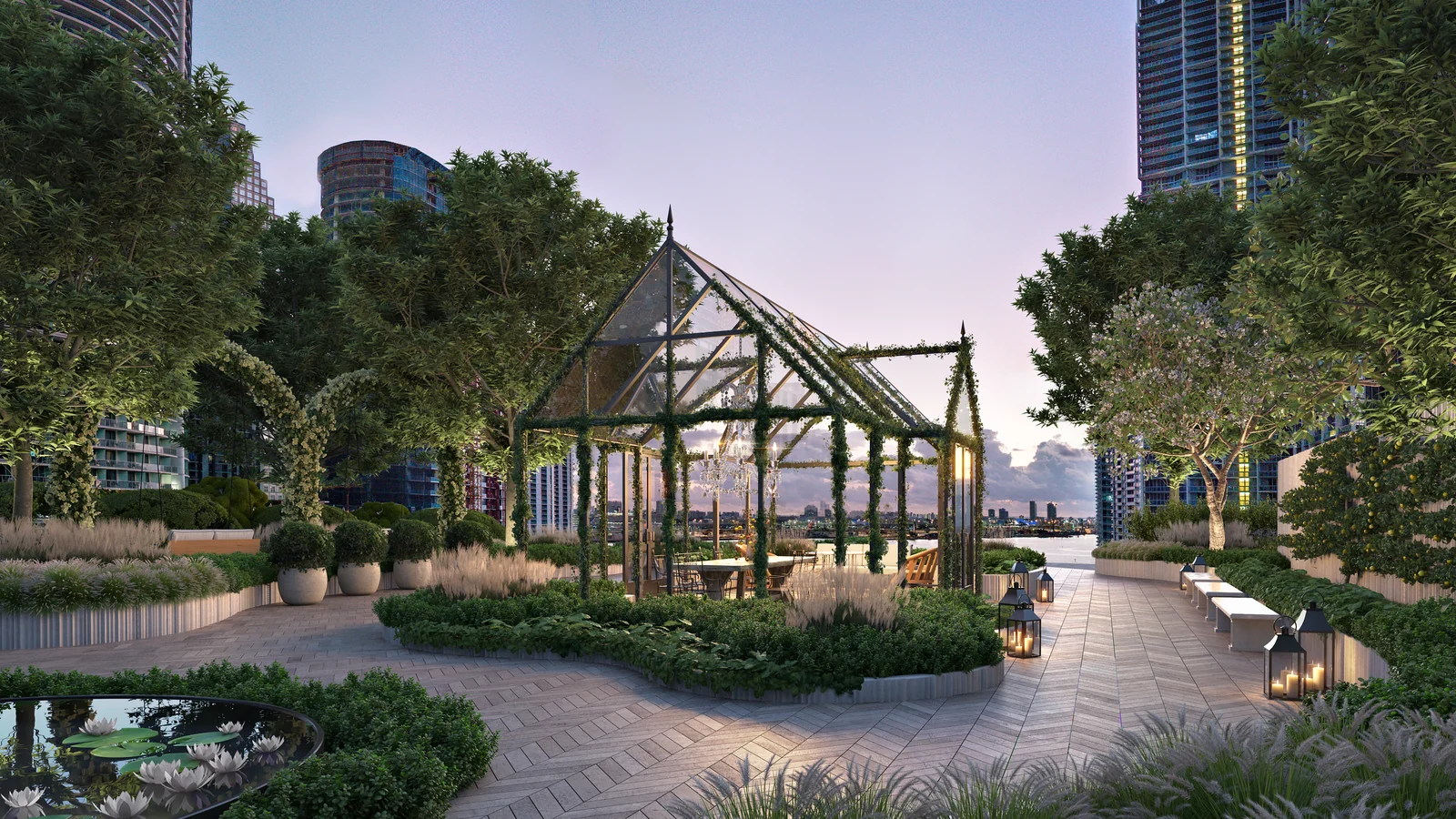
Same non-hotel origin as Dolce&Gabbana, structurally different answer to the operating question. Baccarat’s name licenses the design and the heritage. SH Hotels & Resorts is the company actually staffing the front desk. That layering, brand plus a separately named operator, is closer to how a hospitality group like Four Seasons already works than it might first appear, the difference is that the operator is a distinct, contractually separate entity rather than the same company that licensed the name.
So who actually operates the service program, and how do you check?
Ask for the name of the operating company before you ask about finishes. A true operational partnership, one where the brand or a named operator stays involved through the building’s life rather than departing after the sales gallery closes, is what the sector’s own research ties to premiums holding over time.
Three questions do most of the work: who is contracted to run daily service, is that entity named and separately documented from the developer, and does the licensing agreement extend past the construction period or expire at handover. Buyers evaluating a hospitality-group name can usually answer the third question from the brand’s own track record elsewhere. Buyers evaluating a fashion house, automaker, or heritage maison with its first residential tower cannot, and should ask directly.
Where is this shift concentrated geographically?
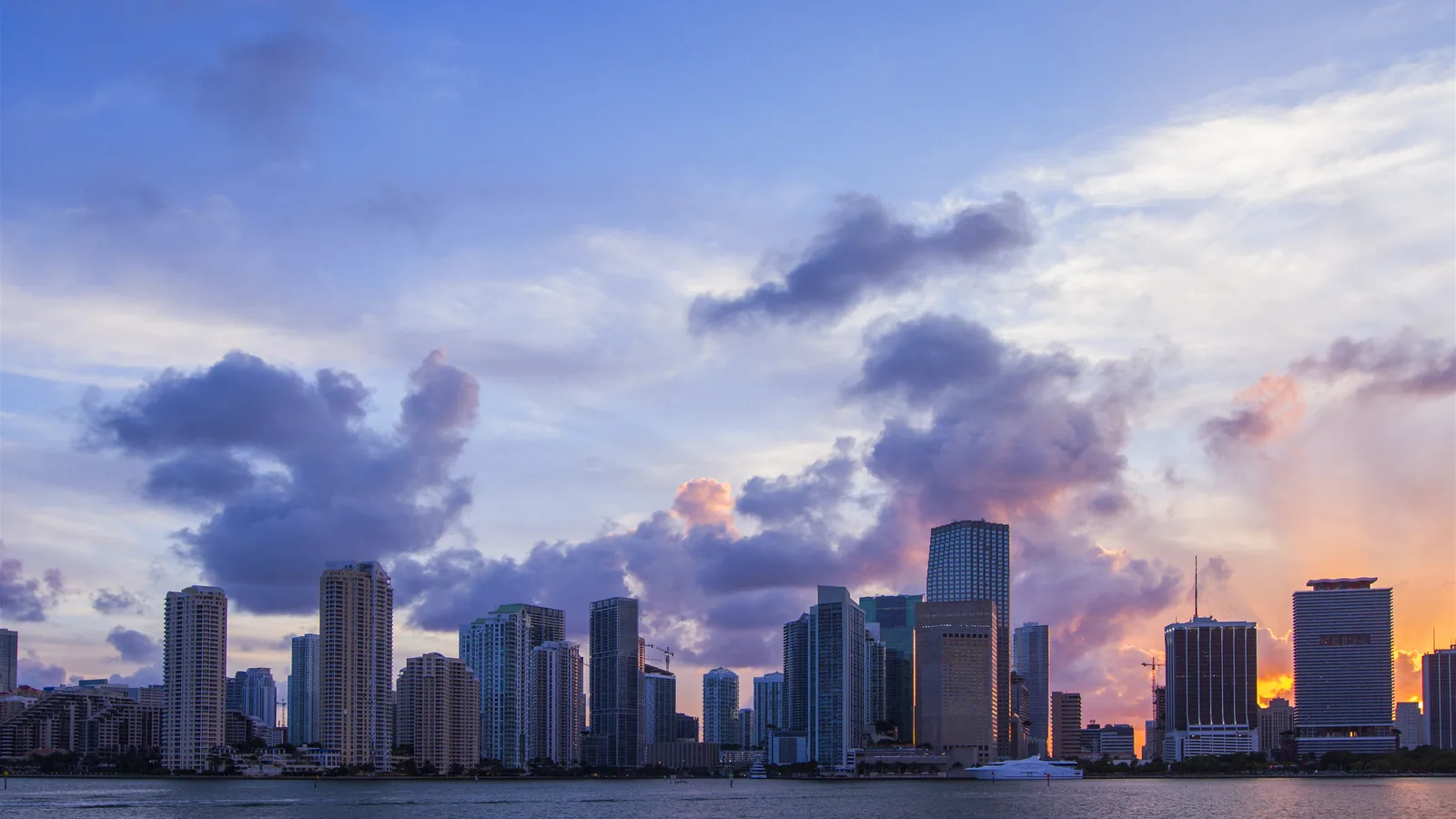
Unevenly, and fastest away from the traditional hubs. Savills’ 2025/26 data puts Middle East and North Africa growth in branded supply at 187% over five years, and Asia-Pacific at 55%. Miami remains the market where the non-hotel wave is most visible in practice, home to both 888 Brickell and Baccarat Residences Miami, alongside Mercedes-Benz Places, three non-hospitality brands building at scale in one submarket inside a single cycle, a submarket where supply-constrained trophy pricing is already its own story, see our look at trophy-asset scarcity across 2026’s key markets.
Which model suits which buyer?
| Operator model | Example | Who runs day-to-day service | What to verify before signing |
|---|---|---|---|
| Brand runs its own program | 888 Brickell by Dolce&Gabbana | Developer/brand-affiliated program (name of operating company not independently published) | Ask who staffs the front desk and manages units on a daily basis, not just who licensed the design |
| Brand partners with a named hospitality operator | Baccarat Residences Miami | SH Hotels & Resorts, under a documented partnership | Confirm the operator’s own track record and how long its agreement runs past handover |
| Established hospitality group | Four Seasons, Ritz-Carlton, Mandarin Oriental-branded towers | The same group, in-house, with decades of hotel operations | Largely self-evident from the brand’s existing portfolio |
The bottom line
The 2026 branded-residence trend is not that the premium exists, that part is well documented at roughly a third above comparable non-branded inventory (Savills 2025/26; Knight Frank 2025). It is that the category of names charging that premium has widened well past hospitality groups, with 19 new non-hotel entrants in 2025 alone, and the operating question buyers used to be able to skip is no longer safe to skip. A hotel-branded tower carries decades of service history into the purchase. A first-time fashion-house or heritage-maison tower is asking buyers to trust a design credential and, separately, whoever ends up running the building, and those two things are not always the same party.
The Brightwill view
We read a branded residence the way we read any building, the operator before the name. A design collaboration tells a buyer what the residence will look like. It does not, on its own, tell a buyer who answers the phone at midnight in year six. Among the projects we surface, 888 Brickell by Dolce&Gabbana and Baccarat Residences Miami sit at opposite ends of the same 2026 trend, one still building out its own operating structure, the other backed by a named hospitality company from day one, and we surface both so the difference is visible before any money moves, not after.
Brightwill Luxury is a curated access platform, not a brokerage, law firm, or financial adviser. Verify the operating structure, the licensing term, and the management agreement of any branded residence with your own advisers before committing capital.
Discuss a branded-residence purchase with our advisory team →