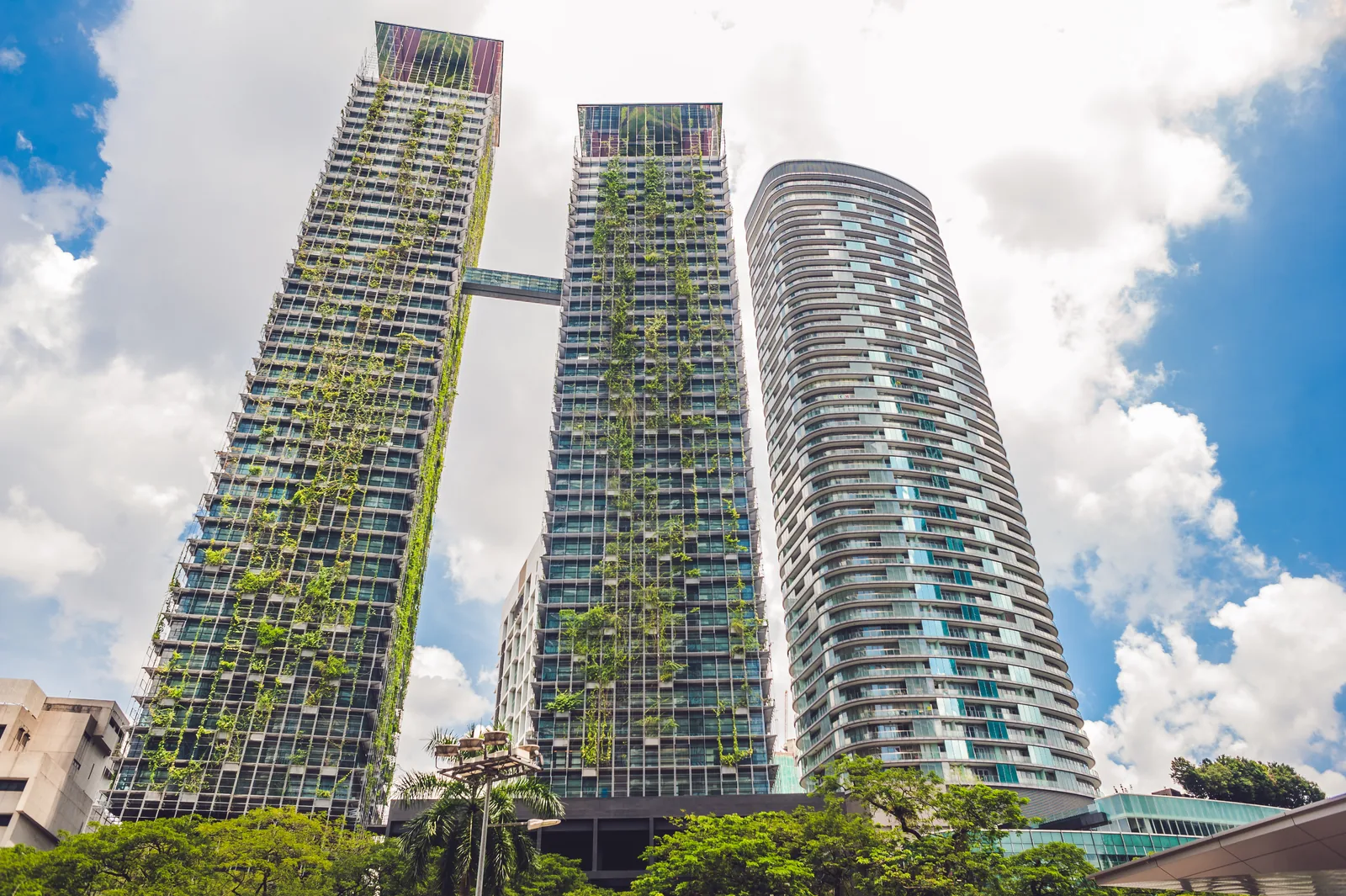
Residency-by-investment is still open in 2026, but the entry-level real-estate routes are mostly closed. The live property paths now run through Greece (from €400,000, with €250,000 surviving only for conversions), the UAE (from 2 million AED), and Qatar (from $200,000). Portugal moved to funds, and the United States runs two parallel tracks, the long-standing EB-5 and the new Gold Card.
The backdrop is a record year for moving money. Henley & Partners recorded roughly 142,000 millionaires projected to migrate internationally in 2025, a decade high (Henley). The UAE led net inflows at around +9,800, while the UK was on track to lose about 16,500, and France, Spain, and Germany were each set for net HNWI outflows for the first time (Henley). Programs price in policy quickly. Families move more slowly, but they are moving now.
Which golden visa programs are still open in 2026?
Most are open, but the rules tightened. Property routes survive in Greece, the UAE, Qatar, Mauritius, and Brazil. Portugal kept its program but cut real estate, pushing capital into funds. The US added the Gold Card alongside EB-5. Thresholds, presence requirements, and citizenship timelines now vary widely by country.
Across 2024 and 2025 the direction was the same almost everywhere: higher entry points, the cheapest property options pulled, capital nudged toward funds. The current map is below, each threshold sourced and the estimates hedged. Treat any figure as a starting point for licensed counsel, not a final quote.
How does Greece's golden visa work in 2026?
Greece is now zone-priced. The minimum is €800,000 (around $865,000) in high-demand areas, including Attica, Thessaloniki, Mykonos, Santorini, and islands above 3,100 residents, and €400,000 (around $430,000) elsewhere (Greek program rules, effective Aug 2024). A €250,000 tier survives only for commercial-to-residential conversions and listed-building restoration. The two property tiers carry a 120 m² minimum living area.

The €250,000 entry point that built the program's reputation no longer applies to standard residential purchases. For most buyers the real decision is between the €400,000 regional tier and the €800,000 prime tier, and that choice is geographic before it is financial. The full breakdown of Greece's zone-priced thresholds sits in our dedicated guide, including which islands and municipalities fall into each band. Greece also remains one of the few European routes where the property itself is the qualifying asset rather than a fund subscription.
What does the UAE golden visa actually require?
The base property route is 2 million AED (around $545,000) for a 10-year renewable visa (UAE ICP and Dubai Land Department). Since the 2026 rule changes, mortgaged and off-plan units count toward the threshold, provided a certified valuation clears 2 million AED and the bank or developer issues a No Objection Certificate. Property below that value can support a shorter two-year visa.
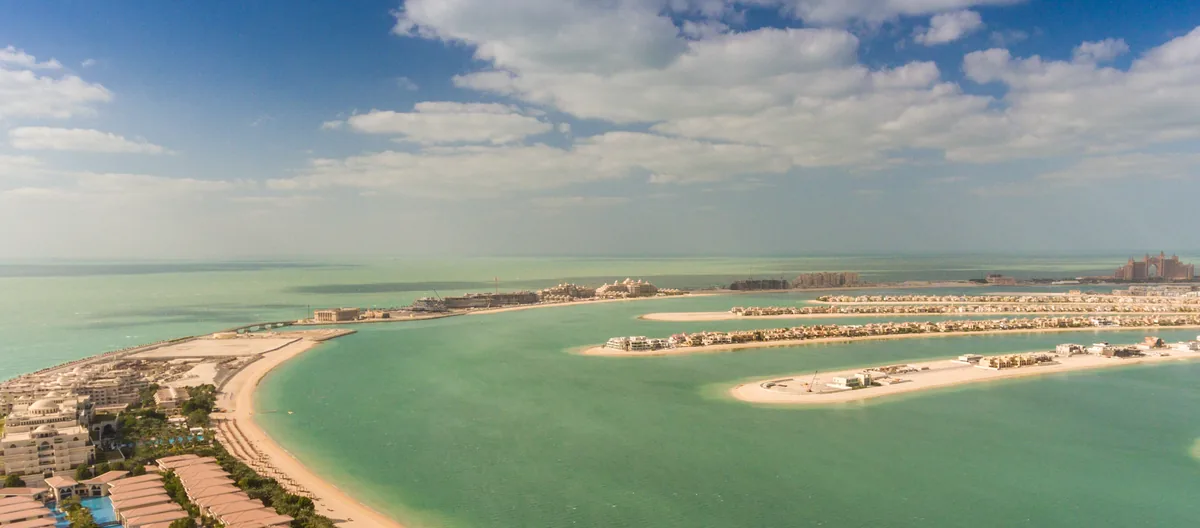
Keep the tiers distinct. The 2 million AED figure is the property route. Larger investment-fund, business, and specialized-talent categories sit on separate tracks with their own criteria, and conflating them is how buyers misjudge what they qualify for. The UAE grants no general path to citizenship, so this is a residency instrument, renewable rather than convertible. The mechanics of the UAE 10-year route, including the mortgage and off-plan treatment, are covered in full in the satellite guide. Dubai's appeal here is partly tax: no personal income tax sits behind the residency, which is one reason the UAE topped Henley's net-inflow ranking.
How does Qatar's new residency-by-investment route work?
Qatar now runs two property thresholds. A purchase from $200,000 in approved zones, including Lusail, The Pearl, and West Bay Lagoon, secures a renewable residence permit, with title deed and residency reported to issue within days (Qatar government, via IMI Daily). A purchase from $1,000,000 opens eligibility for permanent residency.
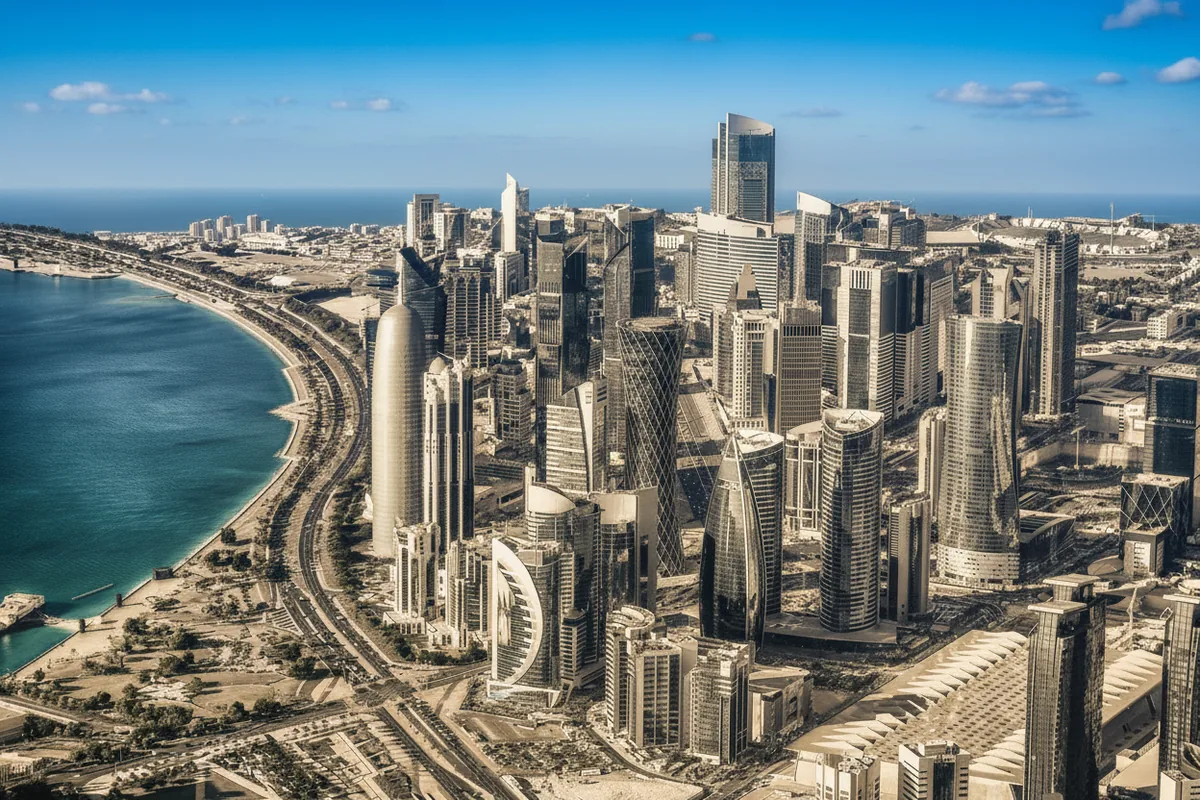
Qatar is the newest route here, and speed is the point. Where most programs run months, its coordinated processing across ministries compresses the title-and-residency step into days. The $200,000 figure is an access point to renewable residency, not permanence, and the two should not be read as the same product. Qatar's title-deed residency and the gap between the access tier and the permanent tier are detailed in the dedicated guide. As a Gulf property-led route, Qatar reads as the regional alternative to the UAE 10-year route, at a far lower entry point.
What changed with Portugal, and is real estate still an option?
No. Portugal removed real estate and real-estate-linked funds from its golden visa in October 2023. The qualifying route is now a €500,000 (around $540,000) subscription in an eligible Portuguese fund, held at least five years, with the fund directing most of its capital to Portuguese commercial companies and carrying no real-estate ties (Portuguese program rules). Cultural and scientific-research routes also exist at lower amounts. The full route-by-route breakdown, including family and residency rules, is in what still qualifies after Portugal’s real estate route closed.

For property buyers, this matters: Portugal now qualifies you through a fund, with a separate purchase if you want an actual home. The fund route now dominates, accounting for over 78% of 2025 applications by one industry count (getgoldenvisa.com). Portugal's historic draw was a relatively short citizenship timeline, and that changed in May 2026. A Nationality Law reform extended the naturalization requirement to 10 years for most investors, 7 for EU and Lusophone nationals, up from five (Diário da República, May 2026). The fund route stays open, but the path to a passport is now twice as long.
Can you still buy a path to the US, and how do EB-5 and the Gold Card differ?
Yes, through two routes. EB-5 requires $800,000 in a Targeted Employment Area or $1,050,000 elsewhere, plus creation of at least 10 qualifying jobs, and it returns the capital if the project performs (USCIS, EB-5 Reform and Integrity Act). The Gold Card, created by executive order in September 2025, asks for a $1,000,000 non-refundable gift per applicant, with no investment or job requirement (trumpcard.gov).

The distinction is structural. EB-5 is an investment with a return and a job-creation test. The Gold Card is a payment to the government that is not invested and not returned, in exchange for lawful permanent resident status. Applications opened in December 2025, and uptake has been thin, 338 applicants and 165 processing fees paid by May 2026, with no publicly verified approvals (CNBC, May 2026). Because it rests on executive authority rather than legislation, the Gold Card faces pending lawsuits over whether an executive order can set immigration policy. EB-5 remains the established, statute-backed route, which is why most advisers still treat it as the default. For the full mechanics of both routes, including where a companion regional-center investment can sit alongside a Miami purchase such as ORA by Casa Tua, see our EB-5 versus Gold Card guide.
What is new in 2026: Mauritius, Brazil, and Singapore?
Three programs widened the field. Mauritius grants a renewable residence permit on a qualifying property purchase from $375,000, with a new Golden Visa announced in May 2026 and details still settling (Mauritius EDB, PDS scheme). Brazil's VIPER gives permanent residency from R$1,000,000 (roughly $185,000) in urban property, or R$700,000 (roughly $130,000) in the North and Northeast (Brazilian VIPER program rules). Singapore's Global Investor Programme starts at S$10,000,000 (roughly $7.4 million) in a qualifying business investment (Singapore EDB, Global Investor Programme). The full mechanics of Mauritius’s $375,000 property permit, Brazil’s VIPER real estate route, and Singapore’s business-only Global Investor Programme are covered in their own guides.
These three sit at the edges of the same trend. Mauritius and Brazil are property-led and low-entry, aimed at lifestyle and tax positioning rather than mobility into a major passport. Singapore is the opposite, a high-bar business-investment route into a permanent residency that can lead to citizenship after a holding period. Brazil's route holds capital for four years and runs through Federal Police processing, so timelines are slower than the Gulf programs. None of the three is a proof market for us yet, but each answers a different buyer question, lifestyle, hedge, or base. Among the properties we track, Anahita Beau Champ in Mauritius and Sapphire Tower by FG in Brazil’s Balneário Camboriú both clear their respective thresholds with room to spare.
How do the main programs compare side by side?
The four columns that decide a program are the entry threshold, what you actually buy, how long the residency lasts, and whether it can ever become a passport. Read across those, and the trade-offs are clear: the cheapest routes rarely lead to citizenship, and the routes that do usually cost more or take years of physical presence.
| Program | Minimum threshold | Investment type | Residency duration | Path to citizenship |
|---|---|---|---|---|
| Greece | €400,000 (€800,000 prime; €250,000 conversions) | Real estate | 5-year renewable | After ~7 years residence (language, presence) |
| UAE | 2 million AED (~$545,000) | Real estate | 10-year renewable | None (renewable residency) |
| Qatar | $200,000 ($1M for permanence) | Real estate | 1-year renewable; PR at $1M | None (residency only) |
| Portugal | €500,000 | Qualifying fund | 2-year renewable | After ~10 years (2026 law; 7 for EU/CPLP) |
| US EB-5 | $800,000 (TEA) | Investment + 10 jobs | Green card (conditional) | After ~5 years as resident |
| US Gold Card | $1,000,000 | Non-refundable gift | Permanent resident status | After ~5 years as resident |
| Mauritius | $375,000 | Real estate | Renewable permit | Separate route |
| Brazil (VIPER) | R$700,000–1,000,000 | Real estate | Permanent (4-yr hold) | After ~4 years |
| Singapore (GIP) | S$10,000,000 | Business investment | Permanent resident | Eligible ~2 years after PR |
Thresholds shift; treat the table as a map, not a quote. Every figure here is sourced above and should be reconfirmed with licensed counsel before any commitment.
The bottom line
Three questions decide the right program, and price is the last of them. First, do you want a passport or only the right to live somewhere. The UAE and Qatar give residency without a realistic citizenship path, while Greece, Portugal, Brazil, and both US routes lead to naturalization on different timelines. Second, do you want the qualifying asset to be a home or a fund. Greece, the UAE, Qatar, Mauritius, and Brazil keep real estate as the asset; Portugal moved to funds; the US runs on investment or a flat gift. Third, how fast do you need it, where Qatar and the UAE clear in a different league from EB-5.
For HNW buyers weighing a property-led route specifically, the active comparison in 2026 is between Greece's regional and prime tiers, the UAE's 10-year property visa, and Qatar's lower-entry title-deed route. Those three are where residency-by-investment through real estate still works cleanly.
The Brightwill view
We read these programs the way we read any asset, by the operator question first. A threshold tells you the entry point; it does not tell you whether the property behind it holds value, whether the developer delivers, or whether the residency survives the next rule change. The cheapest qualifying purchase is rarely the one that protects capital.
Brightwill Luxury is a curated access platform, not a brokerage, law firm, or financial adviser. The projects we surface in golden-visa markets are selected so the residency and the real estate stand on their own, with the qualifying threshold treated as a floor rather than a target. Where a program is volatile or newly announced, we say so, and we work with counsel who represent you, not the seller. Rules change; verify every threshold and timeline before any money moves.
Tell us your profile and target markets, and we'll say which 2026 residency routes actually fit →