Qatar runs two property routes in 2026. A purchase from $200,000 in approved zones secures a renewable, property-linked residence permit, with the title deed and residency reported to issue within days (Aqarat; Al Tamimi). A purchase from $1,000,000 opens eligibility for permanent-residency benefits, covering healthcare, education, and investment (Aqarat). Neither tier grants a path to citizenship.
Qatar is among the newest property-led routes on the 2026 map, and the entry point is the headline. At $200,000 it sits well below the UAE's 2 million AED requirement, which is one reason it now reads as the lower-entry Gulf alternative. The two thresholds are separate products, though, and reading the $200,000 permit as if it were permanent residency is the first mistake a buyer can make here. The full picture across countries sits in our 2026 residency-by-investment overview; this guide takes Qatar alone, in detail.
What does Qatar's $200,000 residency route actually grant?
A renewable residence permit, not permanence. A property purchase from $200,000 (roughly QAR 730,000) in a designated foreign-ownership zone secures a residence permit, tied to the asset and renewable for as long as it is held, with no local sponsor required (Aqarat; Al Tamimi). It carries the right to live in Qatar and access to local services, but it does not convert to permanent status on its own.
This is the access tier. It exists to attach residency to a qualifying property quickly and at a low entry point, and that is the whole of what it does. The permit renews while you hold the title, so the residency is only as durable as ownership of the asset behind it. Treat the $200,000 figure as a floor for entry, not as a number that buys settled status.
How is the $1,000,000 permanent residency tier different?
It is the higher, settling route. A purchase from $1,000,000 (around QAR 3.65 million) opens eligibility for permanent-residency benefits, covering healthcare, education, and investment privileges (Aqarat; Al Tamimi). It carries wider rights than the property-linked permit, and it is positioned as a long-term status rather than a renewable one.
The gap between the two tiers is roughly 5x in capital, and it reflects two different products rather than two grades of the same one. The $200,000 permit renews with ownership; the $1,000,000 route is meant to settle. One caution on conditions: Qatar's general permanent-residence law (Law No. 10 of 2018) carries its own requirements, including Arabic-language knowledge and an annual cap of 100 permits, but government sources do not confirm that these apply to the property-based $1M tier, which Aqarat describes simply as permanent-residency benefits. Read the property route on its own terms, and confirm any added condition with counsel before relying on it.
Which Qatar zones qualify for the property route?
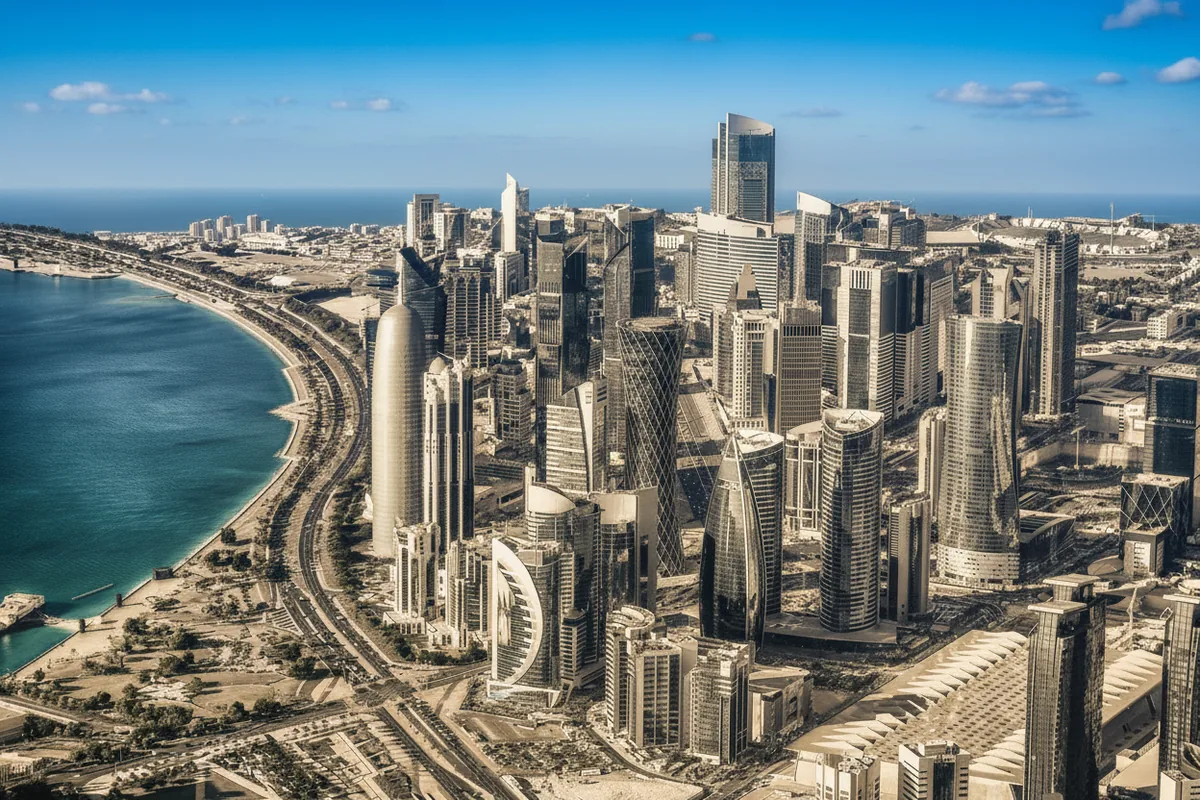
Only designated foreign-ownership zones count. The named freehold areas include Lusail, The Pearl-Qatar, and West Bay Lagoon, with several other districts approved for full or long-term foreign ownership (IMI Daily; Qatar Ministry of Justice). A purchase outside these zones does not qualify a buyer for the residency route, regardless of price.
Qatar separates pure freehold zones, where foreigners own the title outright, from usufruct areas that grant long-term use rather than freehold. For the residency route, the qualifying purchase should sit in an approved freehold zone, which is where Lusail and The Pearl concentrate the foreign-ownership inventory. The zone list is set by the government and has expanded over time, so confirm a specific address against the current designation before committing, not against an older map.
How fast is the process, really?
Days, by the program's own account. Qatar reports issuing the title deed and the residence permit within a few days, through coordinated processing across the Ministries of Interior, Justice, and Labour and the Investment Promotion Agency (Al Tamimi, reporting RERA). That speed is the structural feature of the route, and it is rare among residency-by-investment programs.
Most programs run the qualifying step in months. Qatar compresses the title-and-residency stage by handling it across ministries in parallel rather than in sequence. The figure to weigh is whether the practical timeline holds once due diligence, valuation, and transfer are added, since the few-days claim covers the title-and-permit issuance, not the full purchase. As a Gulf property route, this puts Qatar in the same fast tier as the UAE's 10-year property visa, at roughly a third of the entry price.
Does Qatar's route lead to citizenship?
No. Qatar grants residency through property investment, not a path to naturalization, at either the $200,000 or the $1,000,000 tier. The access permit is renewable, and the higher tier is permanent residency, but neither converts to a Qatari passport. Qatari citizenship sits outside the investment framework entirely.
This is the defining limit of the route, and it should shape the decision. If your goal is mobility into a passport, Qatar is not the instrument, and a citizenship-bearing program belongs in the comparison instead. If your goal is the right to hold property and reside in a no-personal-income-tax jurisdiction, the absence of a citizenship path is not a flaw, it is simply the design. How Qatar sits against the routes that do lead to naturalization is laid out in the full golden-visa comparison.
Can you bring family, and is there a presence requirement?
Family sponsorship covers a spouse and children, and presence terms are lighter than most. The holder can sponsor a spouse and dependent children, subject to the standard income and housing conditions; parents are generally not sponsorable beyond a renewable visit visa. Under Law No. 16 of 2018, the access tier carries a minimum presence of 90 days a year, continuous or intermittent.
The practical read is that Qatar asks for less ongoing residence than programs built around naturalization, which require years of physical presence. The 90-day figure on the access tier traces to Law No. 16 of 2018; the permanent route's presence terms are not set out in the government's own announcement, so confirm them with counsel before relying on either.
The two tiers, side by side
The decision here is binary before it is financial: access or permanence. Read across threshold, what it grants, and duration, and the two routes separate cleanly. The access tier renews with ownership; the permanent tier settles, at five times the capital and with wider rights.
| Tier | Threshold | What it grants | Duration |
|---|---|---|---|
| Access | from $200,000 (~QAR 730,000) | Renewable residence permit; right to reside | 1-year, renews while held |
| Permanent | from $1,000,000 (~QAR 3.65M) | Permanent-residency benefits (healthcare, education, investment) | Permanent |
Figures are sourced above and the program is new, so treat the table as a map, not a quote, and reconfirm with licensed counsel before any commitment.
The bottom line
Qatar answers two different buyer questions at two different prices. The $200,000 access tier suits a buyer who wants a foothold in a Gulf market, a real title in an approved zone, and residency that issues fast, without needing it to become permanent. The $1,000,000 tier suits a buyer who wants settled status and is prepared for a more demanding process to get it. Both suit capital that values a no-personal-income-tax base over a future passport, because neither offers one.
For a property-led route specifically, the live 2026 comparison is between Qatar's two tiers, the UAE's 10-year property visa at a higher entry point, and the European options mapped in our full 2026 golden-visa guide. Qatar's edge in that set is price and speed; its limit is the absence of a citizenship path.
The Brightwill view
We read this route the way we read any asset, by the property first and the permit second. The $200,000 threshold tells you the entry point; it does not tell you whether the residence behind it holds value, or whether the title is true freehold rather than long-term usufruct. The cheapest qualifying purchase in an approved zone is not automatically the one that protects capital.
Brightwill Luxury is a curated access platform, not a brokerage, law firm, or immigration adviser. The projects we surface in Qatar are selected so the residency and the real estate stand on their own, with the qualifying threshold treated as a floor rather than a target. This is a new program, the figures are volatile, and some conditions are not yet confirmed in primary government coverage, so verify every number and timeline with counsel who represent you, not the seller, before any money moves.
Ask us about title-deed timing, and which approved Doha zones fit a $200,000 or $1M entry →