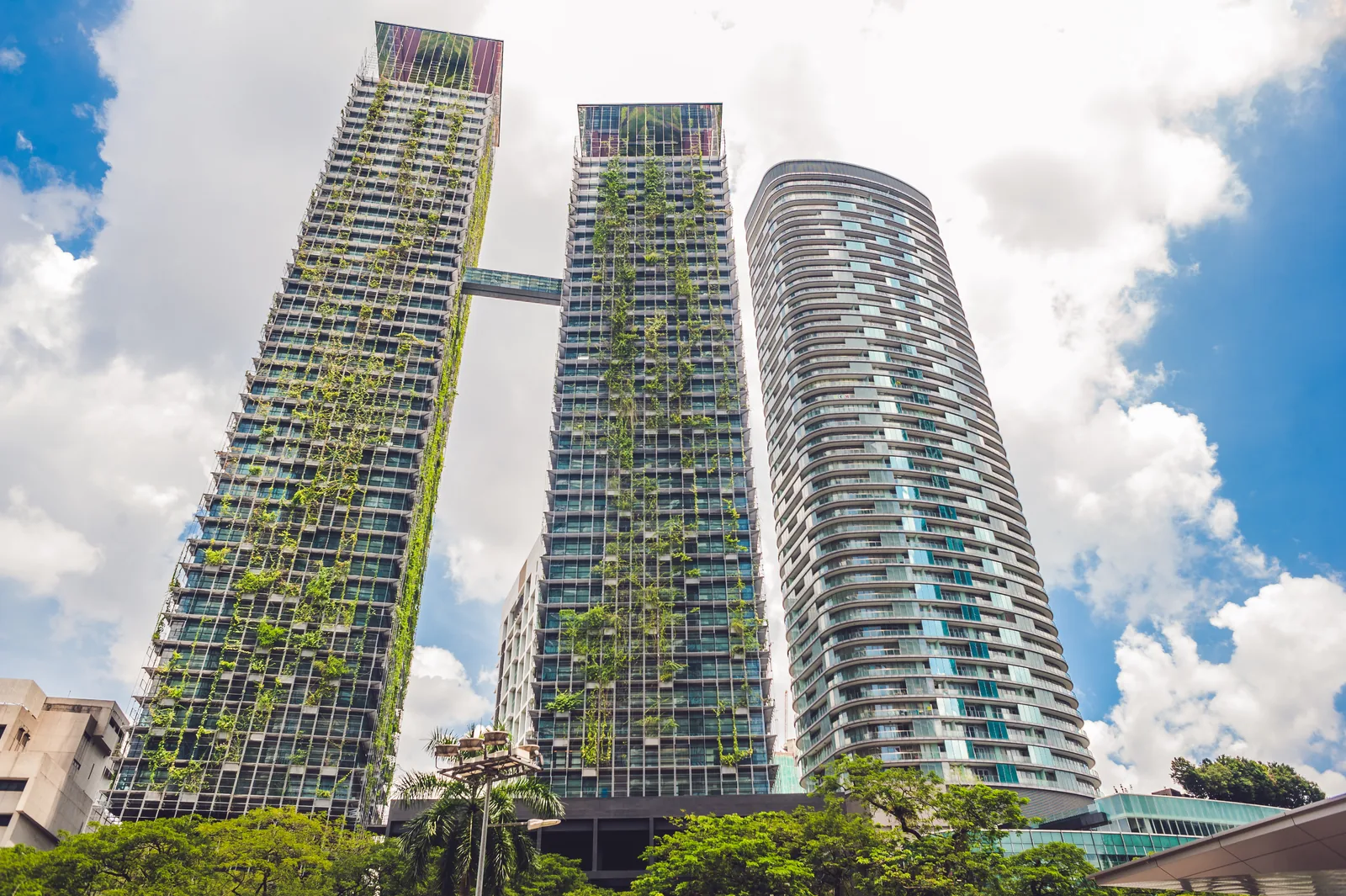
Mauritius grants a residence permit to any non-citizen who buys qualifying real estate for at least $375,000 under an approved scheme, valid for as long as the property is held, with no minimum stay and no business plan required (Economic Development Board). As of July 1, 2026, non-citizens buying under these schemes also pay a doubled registration duty of 10%, up from 5% (Budget Speech 2026-2027; PwC Mauritius). The permit gives full residence rights. It does not, on its own, lead to citizenship.
What changed in Mauritius’s residency-by-investment rules for 2026?
The entry threshold held. The cost of clearing it doubled. Registration duty on residential property bought by non-citizens under the Economic Development Board’s approved schemes rose from 5% to 10% of the purchase price, effective July 1, 2026, under the Finance Act 2025 (PwC Mauritius; EY Mauritius Budget 2025/26 analysis). Land transfer tax on a non-citizen’s resale of the same property also doubled, to the higher of 10% of the property’s value or 30% of the gain realized.
The $375,000 minimum itself is unchanged, set for the IRS, RES, and PDS schemes years ago and extended to Ground+2 apartments under the 2021/22 budget (EDB Mauritius). What moved is the acquisition cost on top of it. On a $500,000 villa, registration duty alone now runs $50,000 instead of $25,000, pushing total buyer-side closing costs from roughly $32,000-$38,000 to $60,000-$65,000 with notary fees added (Immo Des Hauts, citing the Finance Act 2025 rates). That is the number to model before comparing headline thresholds against Greece’s zone-priced tiers or the UAE’s 10-year property route.
How does the $375,000 property route work?
Buy qualifying real estate at $375,000 or more, and you and your dependents receive a residence permit that stays valid for as long as you own the property, with no separate Occupation or Work Permit needed (EDB Mauritius). The permit covers the buyer, spouse, and children under 24.
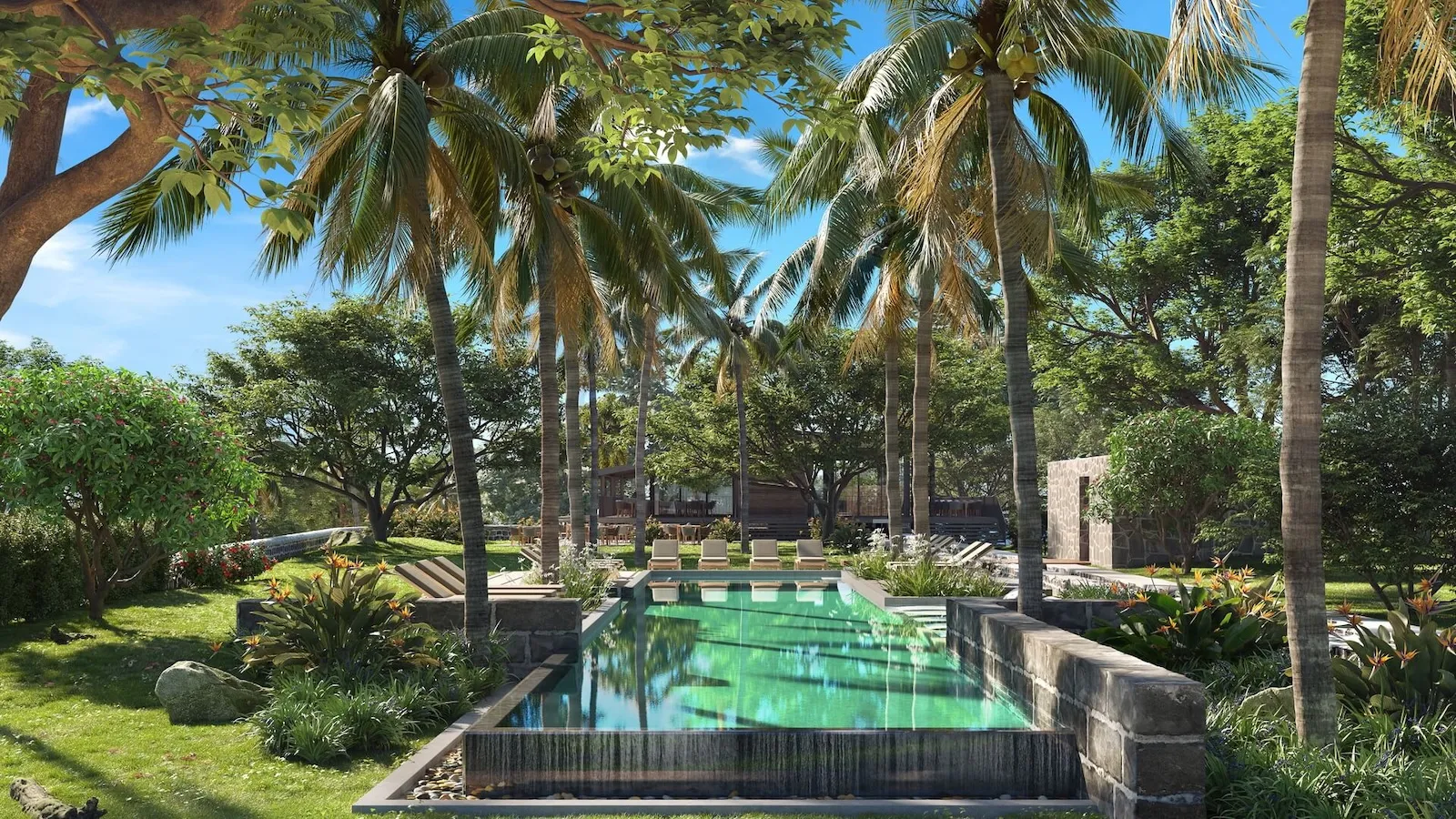
Six scheme types currently qualify: the Integrated Resort Scheme (IRS, larger resort-style developments), the Real Estate Scheme (RES, smaller freehold projects), the Property Development Scheme (PDS, which absorbed most new IRS/RES-style supply after a 2016 reform), the Smart City Scheme (SCS, mixed-use live-work-play developments), the Invest Hotel Scheme (IHS, hotel units with a 45-day annual personal-use cap), and Ground+2 apartments priced above the same $375,000 line (EDB Mauritius). One of our own Mauritius listings, Anahita Beau Champ, sits inside this framework directly, developed under the EDB’s Smart City Scheme, with freehold residences from $1,107,000 across 145-356 m² and 2-3 bedrooms, comfortably clearing the threshold with margin for the new duty.
What does it cost to buy in 2026, and how must you pay?
Budget for the $375,000-plus purchase price, a 10% registration duty, notary fees on a sliding scale of roughly 0.6% to 1.5%, and a $500 EDB application fee (Harvey Law Group; Immo Des Hauts). On a qualifying purchase, most of the money also has to move in a specific way: since December 13, 2024, non-citizens must pay 85% of the price in Mauritian rupees to the developer, after transferring the funds from abroad in a hard convertible currency, with the remaining 15% payable in either foreign currency or rupees (EDB Mauritius).
Above $750,000, only the first $750,000 has to move and settle this way, the balance can be financed through a local rupee loan, repayable in hard currency (EDB Mauritius). Registration duty is paid separately, in USD, EUR, or another hard convertible currency, and the notary must register the deed within eight days. None of this changed with the 2026 duty increase, it sits alongside the purchase price and the new tax.
Do you have to live in Mauritius, and what is the tax profile?
No minimum stay is required to hold the permit. The EDB’s own scheme guidelines tie the permit to continued ownership of the property, not to time spent on the island, so it suits owners who split their year across several addresses (EDB Property Development Scheme Guidelines). Tax residency is a separate question: it is triggered at 183 days in Mauritius in a tax year, or an aggregate of 270 days across the two preceding years, under standard Mauritius residency rules.
For those who do become tax resident, the profile is a genuine draw. Personal income tax is progressive, 0% on the first MUR 500,000 of annual income, 10% on the next MUR 500,000, and 20% above that, with a 15% Fair Share Contribution on income exceeding MUR 12 million a year for three income years from July 2025 (PwC Mauritius). There is no capital gains tax, no inheritance, estate, or gift tax, and no wealth tax (Sovereign Group). That is a shift from the flat 15% rate Mauritius was long marketed on, and worth modeling against home-country exposure rather than assumed.
Is there a path to Mauritius citizenship?
Not directly, and not quickly. Mauritius has no citizenship-by-investment program. Standard naturalization requires 12 months of continuous residence immediately before applying, plus an aggregate of five years of residence during the seven years before that period, together with good character, adequate English or French, and an intention to remain (Mauritius Citizenship Act, Section 9(1)). In practice that is six to seven years of real presence, not a permit renewal exercise.
There is one narrower door. Under Section 9(3) of the same Act, the minister may accept two years of continuous residence in place of the standard test, where the applicant has invested at least $500,000, a higher bar than the $375,000 permit threshold, and a discretionary grant, not an automatic one. Treat citizenship as a multi-year outcome of living in Mauritius, not a feature of the purchase itself.
How does the property route compare with the Occupation Permit route?
The property route is the only one that is not time-limited. An Investor Occupation Permit runs 10 years and requires an active Mauritius-based business, either $50,000 invested with turnover building to MUR 20 million by year five, or $100,000 invested with turnover building to MUR 15 million by year five (Sovereign Group, reflecting the Finance Act 2025). Investor, professional, self-employed, and retired-permit holders can apply for a 20-year Permanent Residence Permit after five years, up from three years before the 2025 reform, provided they clear category-specific income or turnover thresholds (Fragomen; Sovereign Group).
The $375,000 property permit sits outside that ladder. It does not expire on a schedule and requires no business, salary, or turnover test, only continued ownership, the more passive of the two mechanisms, and the more capital-intensive one, before either is weighed against what the underlying asset is worth.
Which route actually suits which buyer?
| Route | Minimum | What it grants | Family coverage | Path to permanence |
|---|---|---|---|---|
| Property (IRS/RES/PDS/SCS/IHS/G+2) | $375,000 real estate | Residence permit for as long as the property is held | Spouse, children under 24 | No fixed upgrade; citizenship only via the separate $500,000 discretionary route |
| Investor Occupation Permit | $50,000-$100,000 in a Mauritius business | 10-year residence permit, renewable on turnover | Dependents via separate Family Occupation Permit | 20-year PRP after 5 years, subject to turnover thresholds |
| Retired non-citizen | $2,000/month ($24,000/year) transferred | 10-year residence permit | Dependents included | 20-year PRP after 5 years with $200,000 aggregate transferred |
A buyer who wants a tangible asset, no operating business, and a residency that simply lasts as long as they own the property fits the $375,000 route. A buyer building an actual Mauritius operating business, or one who wants the fixed 20-year permanent status on a defined timeline, is better served by the Occupation Permit ladder. The numbers in this table move with each budget cycle, reconfirm current thresholds before committing capital.
The bottom line
The Mauritius property route has not changed in substance since the $375,000 threshold was set, but the cost of using it just did. Registration duty doubling to 10% on July 1, 2026 is the single fact every buyer modeling this route needs to update, alongside the doubled land transfer tax that will apply on resale. The permit itself remains one of the more straightforward in this comparison: buy the qualifying property, hold it, keep the residence right for as long as you own it. What it is not is a fast lane to a Mauritian passport, which runs on its own, much longer clock. For how Mauritius stacks up against other property-led routes, see our 2026 residency-by-investment overview.
The Brightwill view
We read a Mauritius purchase the way we read any property-led residency route, the real estate first, the permit as a feature of owning it well. A scheme label and a $375,000 line do not tell you whether a development is well capitalized, well managed, or likely to hold value once the new duty is priced in by the market. Among the projects we surface, Anahita Beau Champ is a useful reference point precisely because it sits inside a named, EDB-certified Smart City Scheme, with a scale and a developer track record that reduce the execution risk buyers often underweight in residency-linked purchases.
Brightwill Luxury is a curated access platform, not a brokerage, law firm, or financial adviser. Mauritius’s residency and tax rules change with each budget cycle, verify every threshold, rate, and payment mechanic with licensed Mauritius counsel before any money moves.
Discuss your Mauritius residency and real estate strategy with our advisory team →