A hospitality branded residence is a home run to the operating standard of a hotel group, with the daily service, not the interior, as the product. It is the founding category of branded real estate as a whole, and what separates the brands inside it is depth of service and the operator's track record: whether the group that runs its own hotels also runs your building after handover. Four Seasons leads on volume and length of track record, Aman on restraint.
Why does hospitality dominate the branded-residence category?
Because the hotel groups invented it. Four Seasons delivered the first branded residence at its Boston hotel in 1985, four decades before fashion houses and car marques arrived, and it now runs more than 50 residential projects worldwide, the largest count of any single hospitality brand (Four Seasons; Savills, Branded Residences 2025-26). The hospitality model is the reference every other category is measured against, since the brand is selling something it already operates every day. Marriott counts around 300 branded-residence projects open or in the pipeline, though that figure spans St. Regis, Ritz-Carlton, and its other luxury names, so it measures a multi-brand group rather than a single-brand tally (Marriott International).
The premium follows the service. Branded stock globally commands around 33% over comparable non-branded homes (Savills, Branded Residences 2025-26), reaching 64% in Dubai on CBRE's separate UAE figures (CBRE, UAE Branded Residences Report 2025), and among resort-branded homes Savills records Amanzoe in Greece at roughly 40%. For a hotel brand that figure is defensible in a way it is not for a badge with no operating history behind it, because the buyer is paying for a service standard that the group can be held to.
Who actually operates a hospitality branded residence after handover?
With the established hotel groups, the brand and the operator are usually the same company, though not in every case, and the form of the arrangement varies: sometimes a full management contract, sometimes a service agreement, sometimes a licence, and always for a defined term. Four Seasons does not own or develop its residences, it partners with a developer and provides the property management itself (Four Seasons). St. Regis and Ritz-Carlton residences are run to Marriott's operating standards, with on-site service for the Ritz-Carlton Residences provided by The Ritz-Carlton Hotel Company (Marriott International). This is much of the reason a hospitality residence carries a premium: the name on the door and the team behind the desk answer to the same group.
The sharper risk is not that a different company runs the building, it is that a different brand does. The CityCenter tower on the Las Vegas Strip opened in 2009 as Mandarin Oriental, Las Vegas. In 2018 the hotel and its adjoining residential units changed hands for $214 million, Mandarin Oriental's management agreement was terminated, and Hilton rebranded the building as Waldorf Astoria, so 225 condominium owners changed brand without moving (Hilton, 2018; Las Vegas Review-Journal). The 225 homes already in individual ownership were not part of that transaction, which is the point: the crest on the door turned over above them, on a contract they were not party to.
Brand and operator lining up is not automatic across every branded residence either, which is why the operator question is the one to ask before the name. Some non-hotel brands appoint a named hospitality operator to run the building. Bulgari's residences sit under Bulgari Hotels & Resorts, a standalone brand created as a 50/50 joint venture between Bulgari and Marriott International in 2001, a sibling to Ritz-Carlton within Marriott's luxury group rather than a division of it, with Bulgari controlling design and Marriott providing the operating infrastructure (Marriott International). Baccarat Residences are run by Starwood Hotels, the operator formerly known as SH Hotels & Resorts, which took the Starwood name on 5 March 2025 (Starwood). The design story is the brand's, the operating story is often somebody else's. For how that split changes the diligence on a design-house residence, see the interior as the product, and who runs the building behind it.
How do the major hospitality brands differ?
By temperament and by service model, not by tier alone. Four Seasons is the recognised name, with the deepest residential track record of any hospitality brand and a service standard the group has run for four decades. Aman is restraint and sanctuary, natural materials and stillness as the primary amenity, and its residential arm is now a core of the business rather than a sideline: founded in 1988 with Amanpuri in Phuket, and under owner Vladislav Doronin since 2014, Aman opened its first standalone residential tower, Aman Residences Tokyo, in 2023 (Aman). St. Regis and Ritz-Carlton carry the traditional five-star formality, the butler service and the ritual as the product. Mandarin Oriental brings an Asian-hospitality service culture, active in Miami at Brickell Key and in Dubai, and it now runs residences-only buildings as well as hotel-attached ones: Mandarin Oriental Residences, Fifth Avenue holds 65 homes in a restored 1920s tower at 685 Fifth Avenue, developed by SHVO, with a residents-only restaurant from Daniel Boulud (Mandarin Oriental).
Rosewood runs the low-count end of the category. In 2025 it opened Rosewood Residences Beverly Hills, the brand's first standalone residences in the United States, 17 homes by Thomas Juul-Hansen on the old Friars Club site, developed by Nahla Capital and GPI Companies, with no hotel in the building and the service team working for owners only (Rosewood). Its larger addresses run the other way: 100 residences inside Cidade Matarazzo in São Paulo, and 276 Rosewood Residences at Rosewood Doha in Lusail, which opened in 2025 after being announced in 2019 for a 2022 opening. Rosewood Hong Kong is often listed alongside these, but the brand files it under serviced apartments rather than residence ownership, so it is not a for-sale address.
Waldorf Astoria is the Hilton flag in this bracket. Waldorf Astoria Residences DIFC is the open Dubai address, and a standalone Waldorf Astoria residential tower in Downtown Dubai with NABNI Developments was announced in March 2024 for 2028, a name worth reconfirming since Hilton's April 2026 residential fact sheet lists Dubai Business Bay and Dubai Islands instead. Spain follows in 2029 with Waldorf Astoria Marbella, signed with Higuerón Developments.
W and Viceroy sit at the licensed end, where the brand and the company running the building are most often different. W has over 400 residences across three towers at Dubai Harbour, an AED 5 billion scheme by Arada completing in 2027, and Arada's own disclaimer is the line to read: the residences "are not owned, developed or sold by Marriott International", the developer uses the W marks under licence (Arada). What is sold as "W Miami" is not a purpose-built W residence at all, it is Icon Brickell Tower 3, a 2009 condo-hotel that opened under Viceroy and was later rebranded W, and the builder says so plainly: Related Group describes it as the former Viceroy Brickell hotel, now a W (Related Group). Viceroy's own first completed standalone residential tower is Viceroy Brickell, opened in May 2026 with 420 residences by Related Group and GTIS Partners, with no hotel attached (Related Group; Florida YIMBY).
Two brands sit at the edges. Six Senses engineers wellbeing into the building itself, sleep protocols and biophilic design rather than a spa bolted on, which puts it on the border with health-led homes, the split between service depth and clinical infrastructure is set out in the wellness brands and their health programs. Dorchester Collection runs the opposite way, low density: The Lana in Dubai holds 39 residences by Foster + Partners, and across its residential addresses, among them Mayfair Park Residences in London, the group keeps unit counts deliberately small rather than building out a broad multi-market platform.
The resort-led Asian brands sell homes on resort land rather than in city towers. Banyan Group runs 14 branded residence schemes, clustered around Laguna Phuket and extending to Bangkok and to Jumeirah Lakes Towers in Dubai (Banyan Group). Anantara reaches the Gulf through Minor Hotels, with 128 residences in Sharjah owned by Arada and 103 waterfront homes at Anantara Mina in Ras Al Khaimah by RAK Properties, handing over in 2028 (Arada; RAK Properties). One&Only sells its homes as Private Homes, available by Kerzner's own account in Mauritius, Mexico, Montenegro, Montana, Greece and Dubai, where One Za'abeel holds 94 of them developed by Ithra Dubai (Kerzner). In each of those the operator and the owner of the land are different companies, and Kerzner states as much in its own paperwork for Mandarina in Mexico, where RLH Properties uses the One&Only name under licence.
| Brand | Operator and track record | Signature feel | Representative project | Who it fits |
|---|---|---|---|---|
| Four Seasons | Partners with a developer and provides the property management itself; the longest operating record in the category | Understated, service over statement | Dubai DIFC (Chipperfield) | Values a recognised name with a long operating record |
| Aman | Vertically integrated operator; residential now core to the business | Austere calm, privacy as the amenity | Aman New York (sold out) | Values seclusion and restraint over a visible crest |
| St. Regis | Run to Marriott standards, long residential record | Astor-era formality, butler and ritual | Casares, Finca Cortesin (under construction) | Values protocol and a staff-run household |
| Ritz-Carlton | On-site service by The Ritz-Carlton Hotel Company | Formal, classic five-star | The Ritz-Carlton Residences, South Beach (Sobe Sky Development) | Values the most recognised name in the category |
| Six Senses | IHG-operated, wellness built into the building | Health engineered into the architecture | Dubai Marina (world's tallest residential on completion) | Values a home built around a wellness programme |
| Dorchester Collection | Low-density operator, deliberately small residence counts | British hotelier restraint | The Lana Dubai (Foster + Partners) | Values a strictly limited, low-density address |
| Rosewood | Operates its own residences; first standalone building in the US now open | Architectural intimacy, a commission rather than a product | Beverly Hills (Thomas Juul-Hansen) | Wants a handful of neighbours rather than hundreds, and a named designer |
| Mandarin Oriental | Brands and manages; residences-only buildings in New York and Beverly Hills | Asian-hospitality precision, near-invisible service | Fifth Avenue New York (SHVO) | Travels Asia-Pacific and wants a familiar service culture |
| Waldorf Astoria | Hilton-managed; DIFC open, Marbella signed | Grand American classicism, arrival as ceremony | Marbella (Higuerón Developments) | Buys the building's history along with the service |
| W / Viceroy | Marriott and Viceroy standards, frequently licensed to the developer | Design-led, a younger register than the classic flags | W Dubai Harbour (Arada); Viceroy Brickell (Related Group, now open) | Wants the newer flag and reads the licence terms first |
| Banyan Tree, Anantara, One&Only | Resort operators building on their own or a partner's resort land | Low-rise resort living rather than a city tower | Anantara Sharjah (Arada); One&Only One Za'abeel Private Homes | Wants a resort address rather than an urban one |
The table compares the brands on operating record and temperament; the project detail sits in the sections around it. Sources: Savills, Branded Residences 2025-26; Marriott International; Aman; IHG; Four Seasons; Hilton; Rosewood; Mandarin Oriental; Arada; Kerzner; Select Group.
Where can you buy hospitality branded residences across Miami, Marbella, and Dubai?
Dubai is the deepest of the three markets, with Four Seasons at DIFC (61 residences, Chipperfield, 2027), St. Regis Downtown Dubai, developed by Emaar as a Marriott licensee in co-development with Adventz Group and completing in late 2026, Six Senses at the Marina and The Palm, and Dorchester Collection's The Lana. Waldorf Astoria Residences DIFC is open in the same district, and W is building at Dubai Harbour with Arada. Miami holds Four Seasons across Brickell, Coconut Grove, and the Surf Club, Aman Miami Beach (22 residences, Kengo Kuma, reported at around $5,000 per square foot), and St. Regis Brickell (154 residences, Robert A.M. Stern).
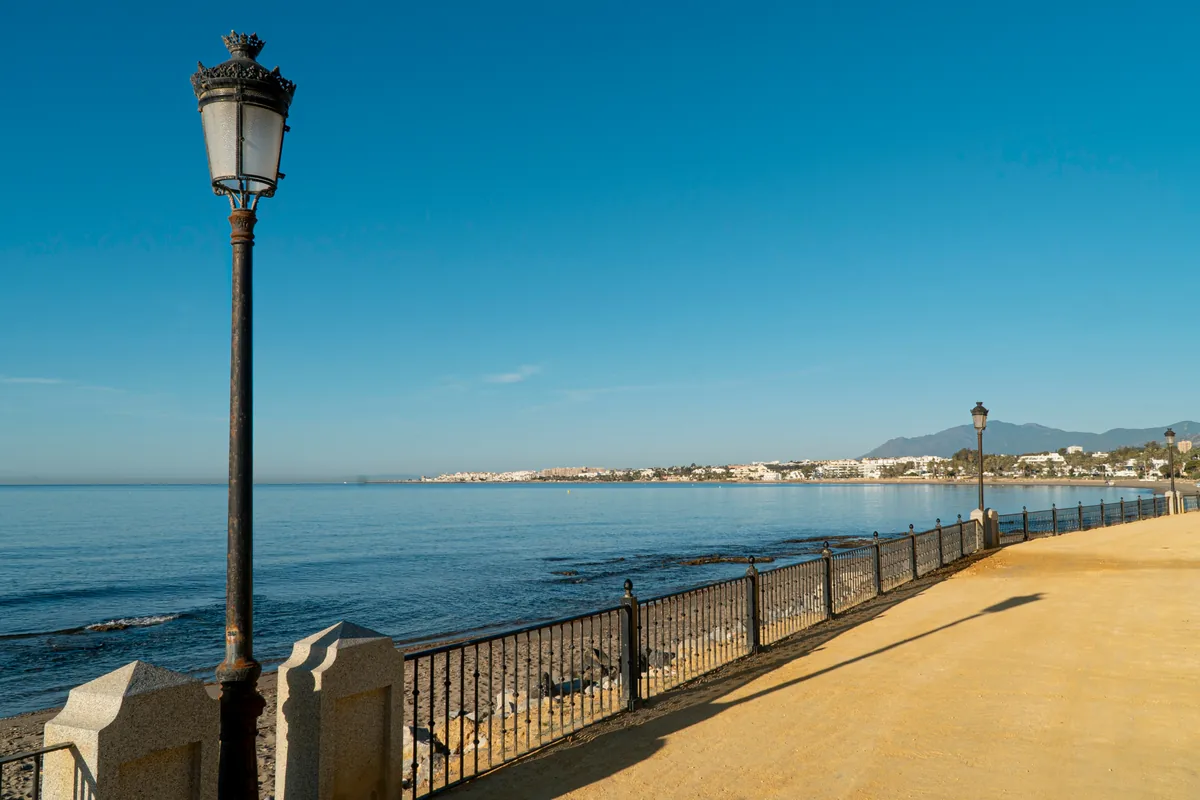
Marbella is where the marketing runs ahead of the signatures. St. Regis is the strongest confirmed hospitality project, at Casares, Finca Cortesin, 46 residences under construction with a first phase around 2027, and Four Seasons is planned at El Pinar (Richard Meier, 136 private residences and 30 hotel residences), where construction is scheduled to start in late 2027 with deliveries around late 2029 (Immobel). Waldorf Astoria joins them next: Hilton and Higuerón Developments signed Waldorf Astoria Marbella in November 2025 for a 2029 opening, 120 rooms alongside 120 brand-managed residences on the historic Marbella Golf site (Hilton, December 2025), a €220 million project and the first Waldorf Astoria in Spain (Higuerón Developments; idealista, 2026). A Ritz-Carlton in Marbella has been reported but is not a signed project, so it should be read as rumour, not availability.
The town also holds the clearest case of announced not meaning built. Marriott announced W Marbella and The Residences at W Marbella in March 2017, 100 low-rise apartments and villas for sale, scheduled to open in 2021. Nine years on nothing has been built: planning approval only arrived in November 2024, and by 2026 the W branding had been dropped while the developer negotiated a different operator for a scheme now at roughly 170 residences. A signed brand agreement is not a delivery date, and construction status is the field to read first. Where hospitality is thin in Marbella, fashion is deep, and the culinary names run their own resident-only service ritual, a branch of the same hospitality lineage, covered in the culinary names and the resident-only table.
Do hospitality branded residences hold their value?
This is a market, not a guarantee, and it turns on the same operator question as everything else. What a later buyer is weighing is whether the service standard the first owner paid for is still in place, so an established operator with a long record is easier to underwrite than a name with no operating history. Four Seasons carries the recognised name and the longest residential track record in the category, which is the record a resale buyer reads. The weaker position sits with names that have no operating history, or with projects where the brand lends its name but a lighter operator runs the building. What sustains the premium is not the crest itself but the service continuing to match it long after the launch event has been forgotten, and that lives in the operator's contract, not the brochure. None of this is a forecast of price, which moves with the wider market.
The bottom line
Hospitality is the category where the brand and the operator are usually the same company, and that is the reason to start here if you want a serviced home to lock and leave. Read the field in two moves. First, match the temperament: recognised reliability points to Four Seasons, quiet sanctuary to Aman, formal ceremony to St. Regis or Ritz-Carlton, wellbeing in the walls to Six Senses, and scarcity to Dorchester Collection. Second, read the operating agreement behind the name, who signs it and for how long, because the service you are buying lives in that document, and a residence is only as serviced as the contract that keeps the operator on site.
The Brightwill view
At Brightwill, the projects we surface are selected with the operator question answered first. In hospitality that question is usually straightforward, the group that owns the name runs the residence, but we confirm it in writing before anything reaches you, along with the length of the management agreement and what happens if it lapses. Unit counts, prices, and completion dates in this sector move, so we treat every figure as indicative until verified, and we flag what is rumoured rather than signed, as with a Marbella Ritz-Carlton that has been reported but not confirmed.
For how hospitality residences sit within the wider map of branded real estate, see our full brand map of luxury real estate.
Tell us the market and the temperament, and we return the operator answer with the shortlist. Request a curated hospitality shortlist for your market →
Brightwill Luxury is a curated access platform, not a brokerage or financial adviser. Unit counts, prices, and completion dates in the branded-residence sector change frequently and are indicative; confirm current figures and project status before any commitment.