Fashion houses sell the interior as the product, and they divide by temperament. Restrained houses such as Armani and Bulgari sell proportion and material over logo. Maximalist houses such as Versace and Dolce&Gabbana sell a visible, unmistakable style statement. The useful way to choose is by the aesthetic you already live in, then to confirm who runs the service after handover. Fashion is one row on the wider brand map of luxury real estate, and the row where the interior does most of the work.
Why do fashion-branded residences split into restrained and maximalist?
Because a fashion house is selling its aesthetic world, and its aesthetic is the whole point. A hotel group sells service; a car marque sells engineering; a fashion house sells how a room looks and feels. That makes temperament the deciding line. At one end, the interior is edited and quiet. At the other, it is theatrical and pattern-forward. Neither is better in the abstract, they are aimed at opposite buyers, and buying one the way you would assess the other is how buyers overpay for the name. This same restrained-versus-showcase split runs through the automotive marques and their approach to putting the car on display, which is the closest category to fashion in how it trades on identity.
How do the fashion houses compare?
The table below sorts the eight houses by temperament, from restrained to maximalist, with a representative project and the buyer each suits. It compares the houses on character rather than on specifications, so read it as a map of the aesthetics; the project detail sits in the sections that follow.
| House | Temperament | Signature feel | Representative project | Who it fits |
|---|---|---|---|---|
| Armani | Restrained | Edited, neutral, quiet-luxury Italian tailoring as architecture | Armani Beach, Palm Jumeirah (Tadao Ando) | Dresses in minimalist neutrals; wants the home edited, not decorated |
| Bulgari | Restrained | Roman jeweller-grade restraint: stone, bronze, low-key precision | Bulgari Residences, Jumeirah Bay, Dubai (apartments and mansions) | Pays for the best material without visual noise; values quality over a visible logo |
| Fendi | Restrained, craft-led | Roman leather-house warmth: wood, brass, saddle-stitch detail | Fendi Château Residences, Surfside (Arquitectonica, Château Group) | Wants hand-finished warmth and provenance over either minimalism or spectacle |
| Karl Lagerfeld | Restrained, with edge | Black-and-white Parisian severity; personal mythology, villa-count scarcity | Marbella villas (Sierra Blanca Estates with The One Atelier) | Values the designer's personal mythology as much as the house name; wants something few others have |
| Elie Saab | Between the poles | Red-carpet romanticism: light, soft geometry, made to flatter | Marbella Golden Mile villas (Sierra Blanca) | Wants decorative romanticism, soft and flattering, without full baroque |
| Missoni | Pattern-forward | Knitwear-house signature: zigzag, colour-block, pattern as the finish | Missoni Baia, Miami Edgewater (OKO Group with Cain International) | Wants colour and pattern as the point, and accepts that the house dressed the rooms rather than runs the building |
| Versace | Maximalist | Full-volume Greco-Roman baroque: Medusa, gold, mosaic | Palazzo Versace Dubai; Ocho de Oro villas, Marbella | Wants status to read at a glance, full-volume and unmistakable |
| Dolce&Gabbana | Maximalist | Sicilian baroque theatre: gold, lace, majolica, pattern on pattern | Design Hills, Marbella Golden Mile | Wants a visible, unmistakable style statement over restraint |

Which fashion houses are the restrained ones?
Armani and Bulgari anchor the quiet end. Armani sells proportion over logo, neutral and edited, the wardrobe philosophy rendered as architecture, and its Palm Jumeirah project is designed by Tadao Ando, whose austere concrete language reads as the built form of the house. Bulgari sells jeweller-grade precision, stone and bronze and low-key material quality, and its Jumeirah Bay development sits at the top of the Dubai price market, with mansions and the Bulgari Marina and Yacht Club, resale reported around AED 26 to 30M (about $7 to 8M). Karl Lagerfeld belongs here too by palette, black-and-white Parisian severity, though its defining trait is scarcity rather than colour, which places it nearer the between-poles cases below. Fendi sits at this end by craft rather than by minimalism: Fendi Château Residences in Surfside, north of Miami Beach, put 58 oceanfront homes across 12 storeys into an Arquitectonica building developed by Château Group, completed in 2016 and widely reported as the house's first branded residential project anywhere (The Real Deal; Curbed).
Which fashion houses are the maximalist ones?
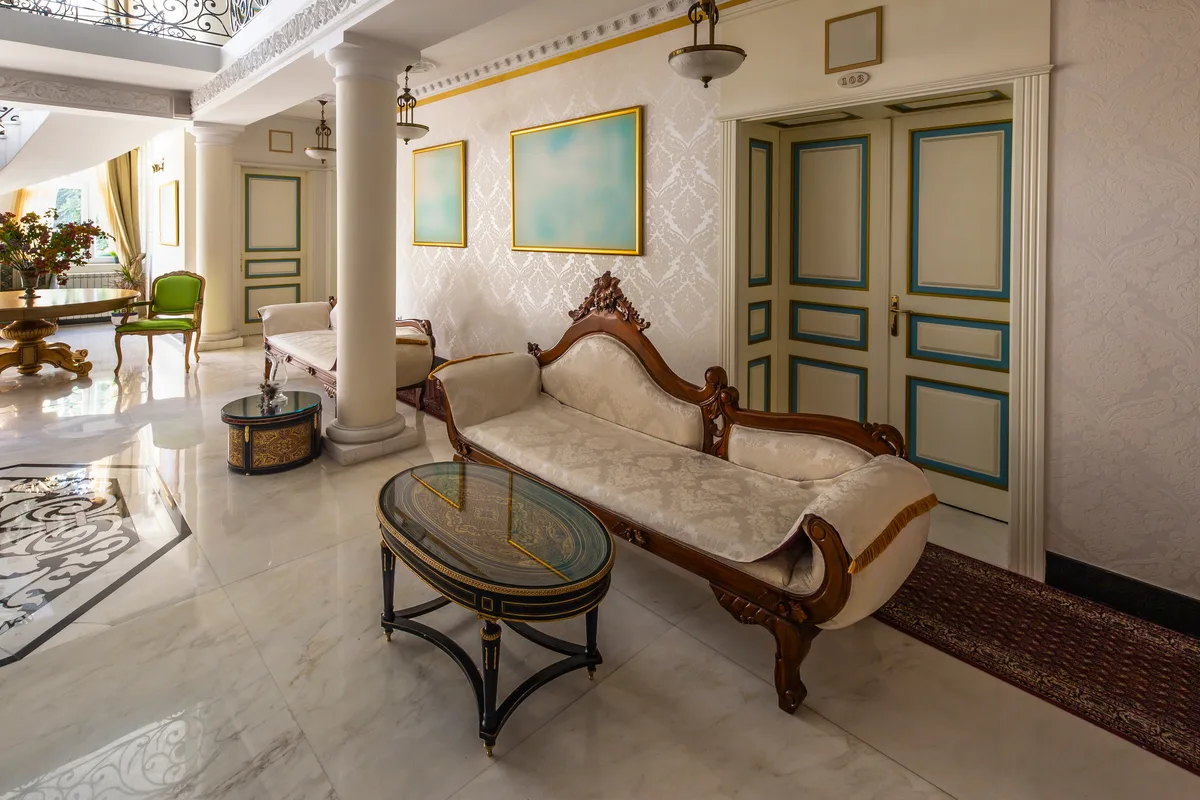
Versace and Dolce&Gabbana occupy the maximalist end by design. Versace works in full-volume Greco-Roman baroque, Medusa, gold, and mosaic, across Palazzo Versace Dubai and its eight-villa Ocho de Oro project in Marbella from 12 million euros. Dolce&Gabbana trades in Sicilian baroque theatre, gold and lace and majolica, and its Design Hills on the Marbella Golden Mile, its first residential project in Europe, reported 250 million euros of sales in seven months across roughly 93 residences priced from 4.975 million to more than 30 million euros (FashionNetwork; Idealista). The house also has a United States project, 888 Brickell Dolce&Gabbana Miami, its first there, a condo-hotel hybrid developed by JDS Development Group with GV Development (JDS Development Group; Dolce&Gabbana, 2024). Missoni works the same pattern-forward end without the baroque, colour-block and zigzag in place of gold and lace: Missoni Baia in Miami's Edgewater, 249 residences completed in 2023 by OKO Group with Cain International, was the house's first branded residential project, and most of what has followed is sold as Interiors by Missoni rather than as a Missoni building. This is the buyer who wants the style to be visible and unmistakable, and for whom Armani's restraint would read as too quiet.
Where do Elie Saab and Karl Lagerfeld sit between the poles?
Between restraint and spectacle. Elie Saab is red-carpet romanticism, light and soft geometry made to flatter its inhabitant, decorative without being baroque, and it ranks joint-second, with YOO Studio, among non-hotel branded-residence brands in EMEA by pipeline to 2030 (Savills EMEA 2023/24), with a five-villa Golden Mile project in Marbella from 8.3 million euros. Karl Lagerfeld reads as restrained by colour, monochrome and severe, but its defining feature is rarity: five villas only in Marbella. They were developed with Sierra Blanca Estates and The One Atelier, and Elie Saab (five villas) and Versace (eight) work at the same villa-count scarcity on the same coast, so the appeal is the designer's personal mythology rather than a record scarcity claim.

Which market has the deepest fashion cluster?
Marbella, on the count of confirmed projects in Europe. The Costa del Sol has become one of the densest fashion-branded pockets in Europe, with confirmed Golden Mile or Sierra Blanca projects from Dolce&Gabbana, Versace, Elie Saab, Karl Lagerfeld, and Armani, most of them developed by Sierra Blanca Estates. Dubai remains the volume market for the towers, Armani in the Burj Khalifa and on the Palm, Bulgari on Jumeirah Bay, Versace at Palazzo Versace. It is also where a jeweller works to the same logic in a single market: DAMAC bought de Grisogono outright in 2022, and every de Grisogono address since, Safa One, Safa Two and Altitude, is a DAMAC address in Dubai (DAMAC, 2022). Miami is the other cluster worth naming, and it is older than it looks, with Fendi Château in Surfside completed in 2016, Missoni Baia in Edgewater, and 888 Brickell Dolce&Gabbana Miami. If the aesthetic you want is a villa rather than an apartment, Marbella is where the fashion houses have gone deepest.
Does the fashion house actually run the building after handover?
Not always, and this is the question to answer before the name. The naming often tells you more than the marketing does. Missoni's newer projects are sold as Interiors by Missoni, Urban Oasis in Business Bay, Moonstone and Trio Isle on Al Marjan Island, Marea at Finca Cortesín among them, and Fendi Casa's role at CASA Canal on the Dubai Water Canal, an $850 million development by AHS Properties, is defined in the partnership announcement as interior solutions for the units and the common areas (AHS Properties, 2023). The house authored the rooms. Somebody else built and will run the building. A fashion house controls the design of its residences, but the day-to-day service program may be run by a named hospitality operator working behind the brand, a distinction the logo on the door does not reveal. The arrangement varies from house to house, so it has to be checked per project rather than assumed for the category. Bulgari, for one, controls the design of its residences while Marriott International operates them under Bulgari Hotels & Resorts, a standalone 50/50 Bulgari and Marriott venture that sits alongside Ritz-Carlton within Marriott's Luxury Group rather than inside the Ritz-Carlton brand (Marriott International). The design story is always real. The operating story is the thing to confirm, and it is the same diligence question that governs who holds the service standard after handover across the hospitality brands. A five-star interior is worth less if nobody with a five-star record is running the building in year six.
The bottom line
Fashion-branded residences are a choice of temperament before anything else. Match the house to the aesthetic you already present in: edited and quiet points to Armani or Bulgari, red-carpet soft points to Elie Saab, theatrical and visible points to Versace or Dolce&Gabbana, and scarce personal mythology points to Karl Lagerfeld. Then confirm who runs the service, because the premium you pay at purchase is defensible only if the operating standard holds. For the full picture of where the fashion houses fit across the wider brand map, our complete map of luxury branded residences by identity sets the categories side by side.
The Brightwill view
At Brightwill, the projects we surface are selected with the operator question answered first, fashion houses included. A fashion name on the door tells us the palette and the temperament, and we confirm the operating story, who runs the program day to day and whether they stay involved, before anything reaches you. Marbella is where we see the deepest fashion supply and the sharpest gaps, and unit counts, prices, and dates across this sector move, so we treat every figure as indicative until verified.
Arrange a private briefing to review the fashion projects we currently surface, matched to your aesthetic and market →
Brightwill Luxury is a curated access platform, not a brokerage or financial adviser. Unit counts, prices, and completion dates in the branded-residence sector change frequently and are indicative; confirm current figures and project status before any commitment.